Zynq MPSoC Semiconductor Vision Alignment Solution | FPGA High-Speed Image Acquisition + Hardware Image Processing for Micron-Level Visual Positioning
Zynq MPSoC Semiconductor Vision Alignment Solution | FPGA High-Speed Image Acquisition + Hardware Image Processing for Micron-Level Visual Positioning
Tags: Zynq MPSoC, ARM+FPGA, Semiconductor Equipment, Vision Alignment, Image Hardware Acceleration, Micron-Level Positioning, Machine Vision, Domestic Vision Equipment
Abstract: Semiconductor die bonding, wire bonding, wafer inspection, and chip probe testing equipment heavily rely on high-precision machine vision alignment. Image acquisition latency, time-consuming image processing, poor alignment repeatability, and asynchronous motion-vision are core factors leading to chip misalignment, poor wire bonding, and wafer scrap. Traditional pure ARM+software vision solutions suffer from low frame rates, high image processing latency, and severe floating-point computation overhead, making them unsuitable for high-speed precision alignment scenarios. X86 industrial PC + separate vision camera solutions are costly, have complex wiring, and suffer from decoupled vision and motion timing, leading to large synchronization errors that cannot meet the micron-level process standards of high-end semiconductors. This article presents an integrated vision alignment architecture based on the Zynq UltraScale+ MPSoC heterogeneous architecture, featuring FPGA hardware image acquisition, real-time image processing, R5F vision-motion synchronization, and A55 intelligent algorithm analysis. It offloads all image decoding, filtering, edge detection, and feature localization to PL hardware acceleration, achieving microsecond-level image processing, zero-latency visual feedback, and micron-level repeatable alignment accuracy. By quantitatively comparing the performance differences with traditional ARM and X86 vision solutions, this article details the architecture of semiconductor precision vision systems, the implementation of core algorithms, and key engineering pitfalls to avoid. This solution can be directly applied to the domestic development of semiconductor vision alignment, appearance inspection, and precision positioning equipment. After reading this article, you will master: core design principles for semiconductor precision vision alignment, FPGA hardware image acceleration solutions, vision-motion synchronization control techniques, shortcomings of traditional vision architectures, and root causes for unstable vision positioning accuracy in mass production.
I. Industry Background: Core Pain Points of Semiconductor Precision Vision
Semiconductor packaging and testing equipment operates in high-speed, ultra-high-precision vision scenarios. Processes such as chip die bonding alignment, gold wire bonding point calibration, wafer eccentricity correction, and probe alignment testing impose extremely stringent requirements on vision systems regarding acquisition frame rate, processing latency, positioning accuracy, and timing synchronization. Ordinary industrial vision typically requires only millimeter-level accuracy, whereas semiconductor processes have rigid indicators: visual repeatable positioning accuracy of ±0.5μm, single-frame image processing latency ≤20μs, vision-motion synchronization error ≤10μs, and high-speed continuous shooting without ghosting or frame loss.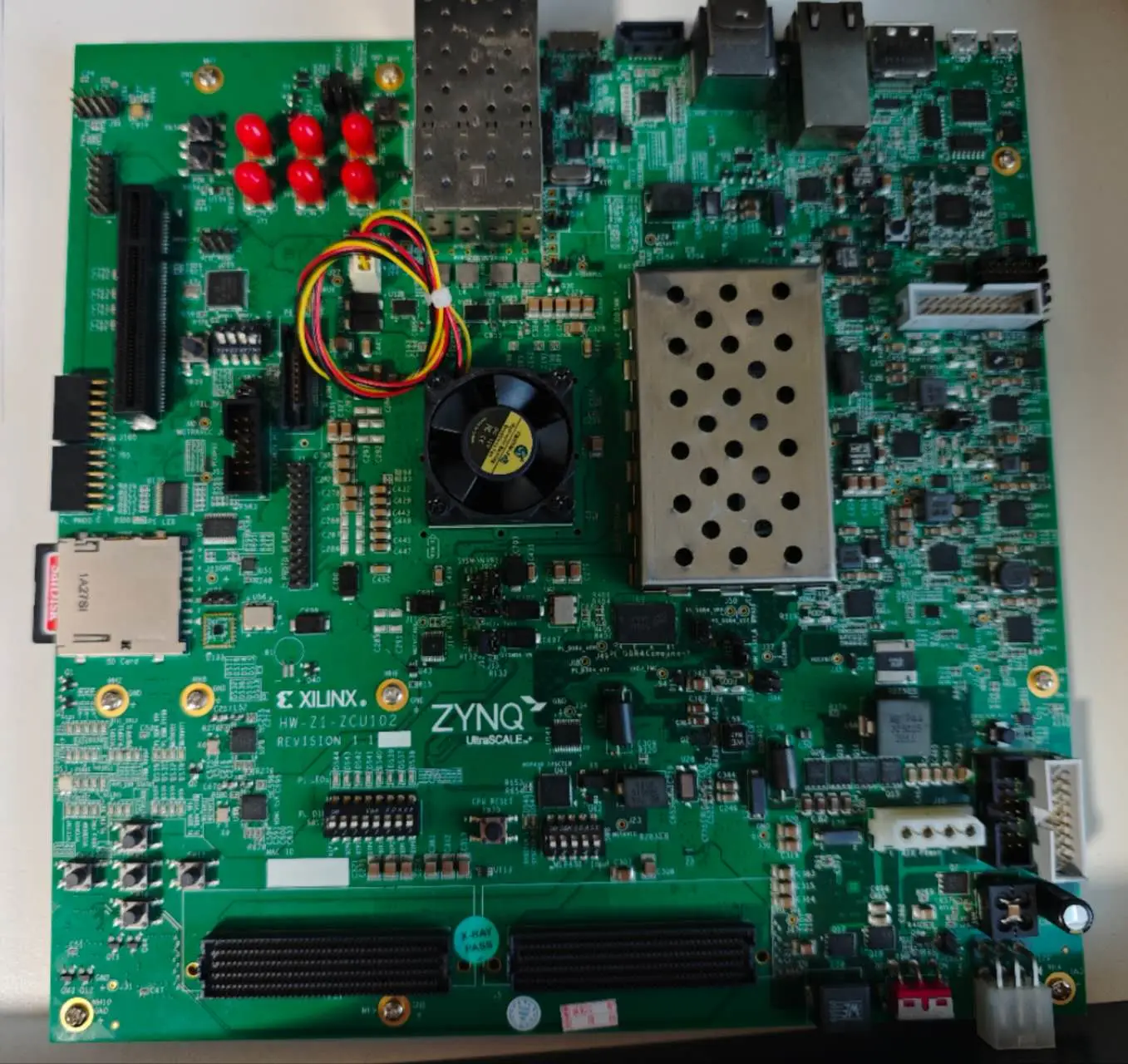
Compared to general automated visual inspection, semiconductor precision vision alignment faces three rigid technical bottlenecks in mass production, which are also core challenges that traditional ARM/X86 vision architectures cannot overcome:
-
Low Latency Requirement: Semiconductor equipment moves at high speeds. If single-frame image processing latency exceeds the standard, alignment lag and coordinate deviation will occur. At high operating speeds, errors will be continuously amplified, directly leading to batch process defects.
-
Sub-micron High-Precision Positioning Requirement: Mini LEDs, MOS transistors, IC chips, and tiny wafers are extremely small. Traditional software interpolation and edge detection algorithms have limited accuracy, making it impossible to achieve sub-pixel, sub-micron precise positioning.
-
Strong Vision-Motion Synchronization Requirement: Vision capture, image computation, coordinate compensation, and motion execution must form a closed-loop timing. Misalignment of vision and motion timing is the hidden core reason for equipment high-speed alignment jitter and positioning drift.
Currently, the two mainstream traditional machine vision solutions in the industry both have architectural shortcomings and cannot meet the mass production requirements of high-end semiconductor precision vision:
1.1 Core Shortcomings of Pure ARM Software Vision Solutions (Mainstream for Mid-to-Low-End Equipment)
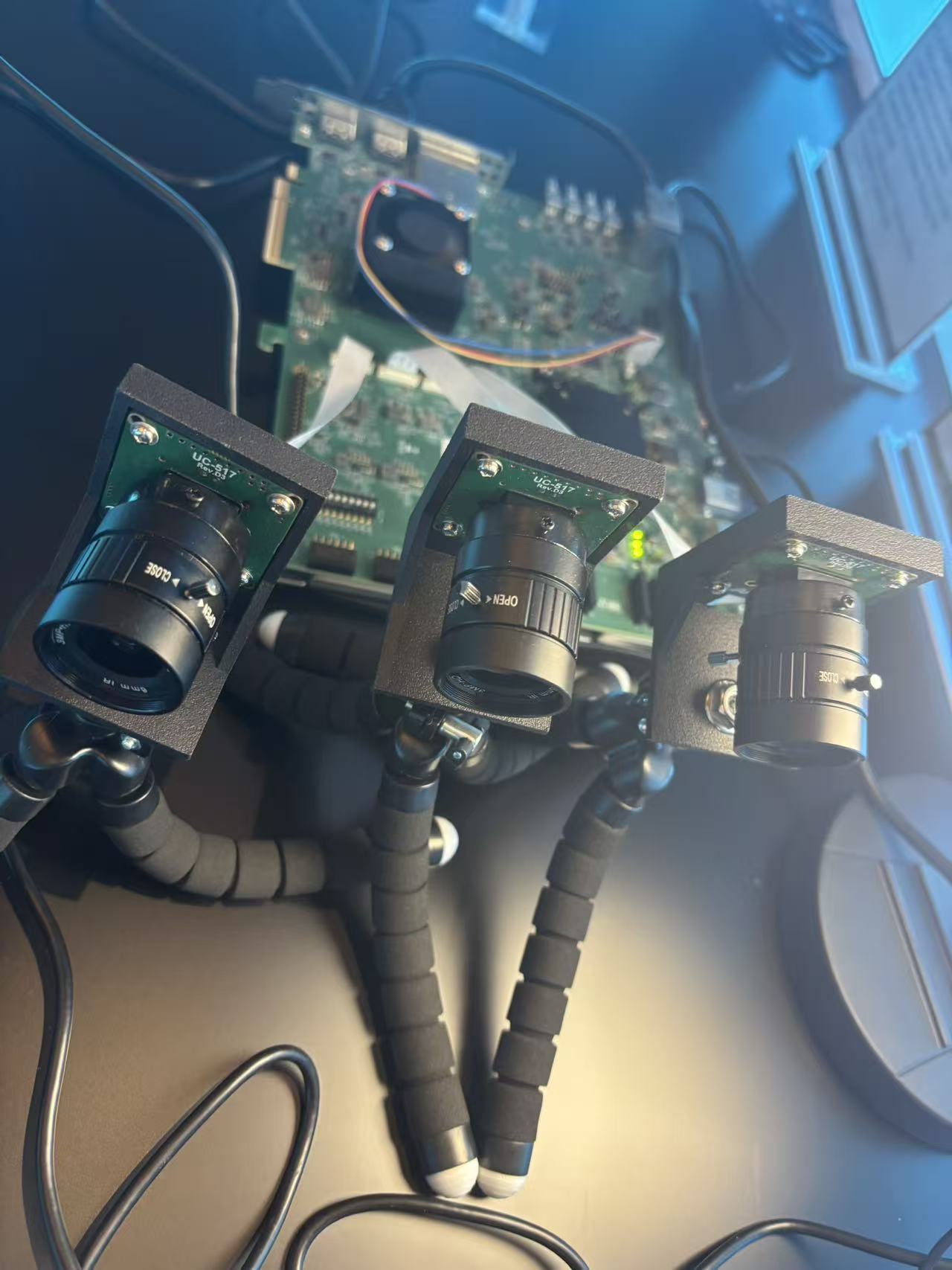
Many domestic mid-to-low-end semiconductor equipment use ARM main controllers paired with USB/MIPI cameras. All image acquisition, noise reduction, edge detection, feature matching, and coordinate calculation rely on CPU software serial processing, leading to four inherent defects:
-
Extremely High Image Processing Latency: Software pixel-by-pixel traversal and floating-point operations consume significant time, with single-frame processing latency reaching tens of milliseconds. In high-speed motion scenarios, alignment severely lags, making real-time tracking of workpiece positions impossible.
-
Limited Frame Rate, Severe High-Speed Ghosting: Limited CPU computing power cannot support high-frame-rate continuous image processing. High-speed capture is prone to frame loss, image ghosting, and pixel distortion, significantly reducing positioning accuracy.
-
Decoupled Vision-Motion Timing: Software processing cannot be hard-synchronized with motion control. The image capture moment cannot be precisely aligned with the motion point, leading to fixed timing deviations and noticeable positioning drift during long-term operation.
-
Severe Coupling of Computing Resources: Vision algorithms occupy most CPU resources, leading to preemption of real-time tasks such as motion control, temperature control, and bus scheduling, which significantly degrades overall equipment stability and real-time performance.
1.2 Core Shortcomings of X86 Industrial PC + Industrial Camera Split Vision Solutions (Traditional for High-End Equipment)
Imported high-end semiconductor equipment generally adopts an X86 industrial PC + GigE industrial camera split architecture. While it can achieve higher frame rates and accuracy, it has significant drawbacks for industrial implementation, severely restricting domestic substitution and equipment miniaturization upgrades:
-
Uncontrollable Timing in Split Architecture: Camera capture, network cable transmission, and host PC software processing involve multiple levels of latency. The total latency fluctuates significantly, making deterministic microsecond-level latency impossible, leading to random errors in precision alignment.
-
High Difficulty in Vision-Motion Synchronization: Camera hardware triggering, software computation, and motion command issuance belong to different systems. Cross-device timing alignment is difficult, leading to large synchronization errors and prone to alignment deviations during high-speed linkage.
-
High Cost, Reliance on Imports: High-end industrial cameras and vision algorithm software are expensive, and core operators are closed-source, making debugging and iteration dependent on external parties, leading to persistently high equipment BOM costs.
-
Bulky System, High Failure Rate: The stacking of industrial PCs, cameras, network cables, and adapter modules results in a complex equipment structure, significant wiring interference, high on-site maintenance difficulty, and poor long-term mass production stability.
II. Zynq MPSoC Heterogeneous Architecture: The Optimal Solution for Semiconductor Precision Vision
The Zynq UltraScale+ MPSoC leverages its PL FPGA hardware parallel acceleration + PS multi-core ARM (A53+R5F) single-chip heterogeneous fusion architecture to completely overcome the core bottlenecks of high latency in traditional software vision and chaotic timing in split vision systems. By implementing the entire process of image acquisition, pre-processing, feature extraction, and sub-pixel positioning with hardware acceleration on the PL side, the R5F hard core achieves hard synchronization control of vision, motion, and bus, while the A53 core handles intelligent matching algorithms, vision parameter configuration, and data traceability. This realizes an integrated solution of "ultra-fast hardware image processing + microsecond-level timing synchronization + intelligent precision alignment," making it the optimal technical route for domestic semiconductor precision vision alignment equipment.
2.1 Dedicated Software and Hardware Layering for Vision Alignment Systems
1. PL (FPGA Programmable Logic) – Core of Hardware Vision Acceleration
The PL side operates independently of CPU intervention, establishing dedicated hardware image acquisition paths, hardware image pre-processing IPs, edge detection, sub-pixel interpolation, and feature localization modules. All pixel operations, noise reduction, and feature extraction are executed in parallel hardware pipelines, compressing single-frame image processing latency to microsecond levels, with no software latency or frame rate stutter. Simultaneously, the hardware implements camera triggering and capture timing control, synchronized with the motion clock, fundamentally resolving vision latency, timing misalignment, and alignment drift issues from a hardware perspective.
2. R5F Real-time Core – Core of Vision-Motion Synchronization
The independent Cortex-R5F hard core runs bare-metal, without reliance on the Linux system. It is responsible for vision capture trigger timing calibration, real-time image coordinate compensation, vision-motion linkage synchronization, EtherCAT bus vision data interaction, and abnormal alignment protection. It precisely locks the vision and motion timing rhythm, eliminates system scheduling interference, and ensures stable alignment accuracy without drift during high-speed operation.
3. A53 Application Core – Core of Intelligent Vision Algorithms and Business Logic
The Cortex-A53 multi-core runs the Linux system, responsible for high-precision feature matching, template training, vision parameter calibration, distortion correction, alignment data storage, host PC visual debugging, and process yield data analysis. It balances the iteration of high-end intelligent vision algorithms with equipment debuggability and traceability.
2.2 Core Differentiated Advantages: MPSoC VS Pure ARM / X86
A structured comparison of the core differences between the three vision architectures precisely highlights the irreplaceable nature of Zynq MPSoC in semiconductor precision vision scenarios:
-
Outperforming Pure ARM | Hardware Pipeline Completely Eliminates Software Latency: Pure ARM software processes frames serially, resulting in millisecond-level latency and low frame rates. MPSoC PL hardware pipelines process images in microseconds, with unlimited frame rates and zero stutter, suitable for high-speed precision alignment.
-
Outperforming X86 | Single-Chip Common-Source Timing for Complete Synchronization: Abandoning the split camera + industrial PC architecture, vision acquisition, processing, motion control, and bus timing all use a common-source clock within the chip, completely eliminating cross-device transmission latency and synchronization errors, making alignment stability superior to traditional split solutions.
-
Exclusive Hardware Sub-pixel Positioning | Maximized Precision: Hardware implementation of sub-pixel interpolation and fine edge fitting breaks through the accuracy limits of software algorithms, consistently achieving sub-micron repeatable alignment accuracy, suitable for tiny chips and precision wafer processes.
-
Mass Production Long-Term Stability Advantage | Adapting to Semiconductor Ten-Year Mass Production: Industrial-grade wide-temperature operation, 15+ years of long-term supply, fully autonomous and controllable vision algorithms, no reliance on imported hardware or closed-source software, perfectly matching the long-cycle mass production and domestic substitution needs of semiconductor equipment.
III. Precision Vision Alignment System Solution and Hardware Resource Configuration
3.1 Core Hardware Resource List (Directly Reusable for Projects)
This solution is suitable for the full range of semiconductor die bonding, wire bonding, wafer inspection, and probe testing precision vision equipment. The hardware configuration is standardized and can be directly deployed for mass production:
-
Main Control Chip: Xilinx Zynq UltraScale+ MPSoC (ZU3/ZU4) industrial-grade wide-temperature models
-
Image Acquisition: Supports MIPI/CMOS high-speed cameras, global shutter acquisition without ghosting
-
Hardware Image Processing: PL-side hardware noise reduction, Gaussian filtering, binarization, edge detection, sub-pixel fitting
-
Key Indicators: Single-frame processing latency ≤20μs, visual repeatable positioning accuracy ±0.5μm
-
Synchronization Performance: Vision-motion timing synchronization error ≤10μs, no random timing deviation
-
Operating Architecture: PL hardware image acceleration + R5F vision-motion synchronization