Multi-Channel GMSL Camera Synchronous Acquisition and Low-Latency Image Preprocessing System Based on Zynq MPSoC | High-Speed Automotive Vision Solution
Multi-Channel GMSL Camera Synchronous Acquisition and Low-Latency Image Preprocessing System Based on Zynq MPSoC | High-Speed Automotive Vision Solution
Computer Components
📌 Article Summary: Automotive autonomous driving, surround view, and perception systems commonly use GMSL coaxial HD cameras. Compared to traditional MIPI and USB cameras, GMSL offers advantages such as long-distance transmission, strong anti-interference, high resolution, and high frame rates. However, multi-channel GMSL cameras present engineering challenges like timing asynchrony, high transmission latency, data bandwidth congestion, and time-consuming image preprocessing. This article leverages the Xilinx Zynq MPSoC heterogeneous architecture, utilizing the PL-side FPGA's hardware parallel processing capabilities to achieve real-time synchronous decoding, frame buffering, and timing alignment for multi-channel GMSL cameras. This is complemented by the PS-side multi-core ARM for lightweight preprocessing such as image denoising, scaling, and color correction, resulting in a microsecond-level low-latency image acquisition and processing chain. This system is perfectly suited for industrial automotive vision scenarios like surround view, driving perception, and automotive testing.
🔑 Keywords: Zynq MPSoC, GMSL, Automotive Camera, Multi-Channel Synchronous Acquisition, Image Preprocessing, Low-Latency Vision, FPGA Image Acceleration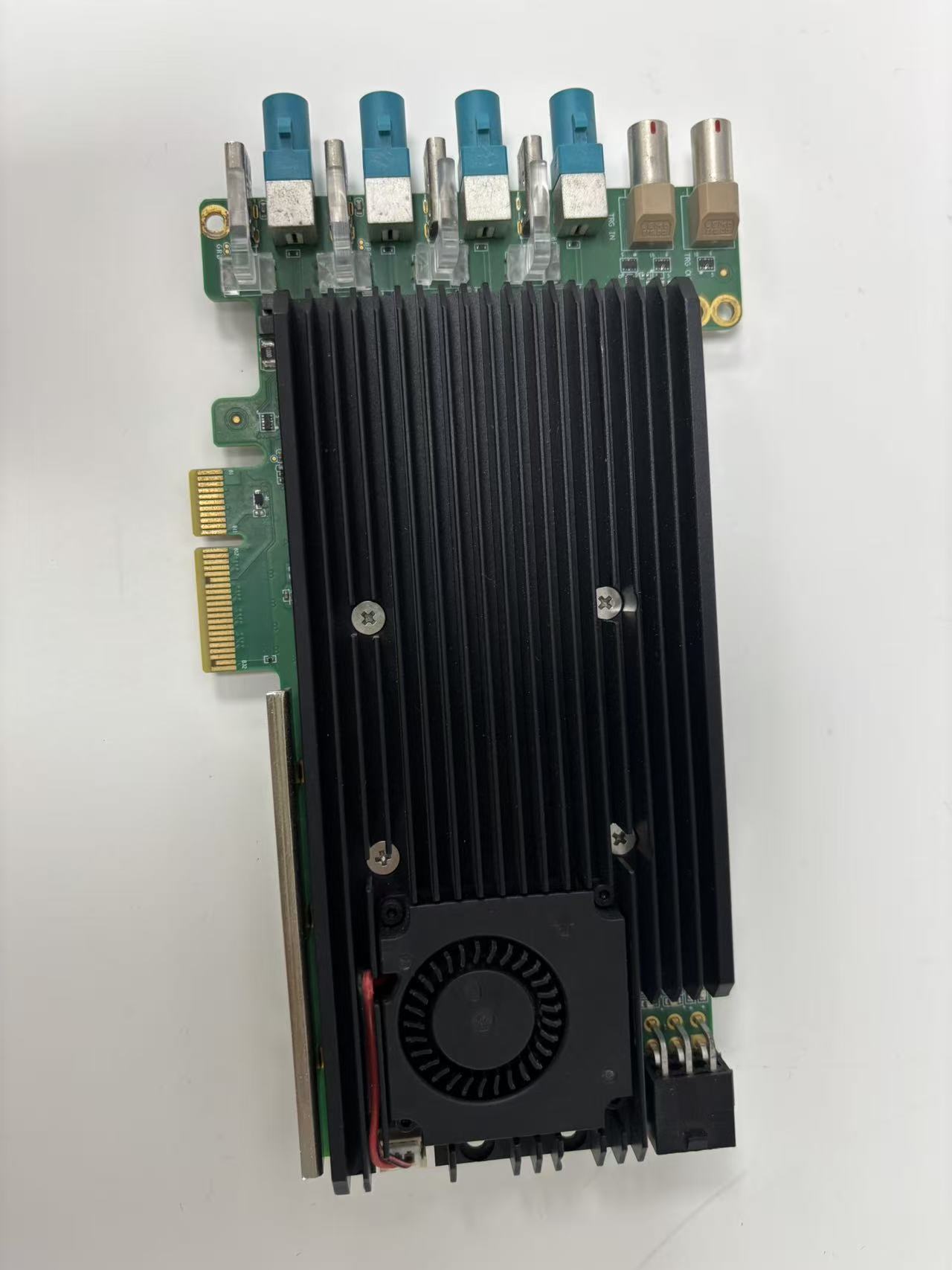
1. Project Background and Industry Pain Points
With the rapid iteration of autonomous driving, smart cockpit, and automotive active safety technologies, automotive vision systems have evolved from single-channel cameras to 4-channel, 6-channel, or even 8-channel multi-camera synchronous perception. GMSL (Gigabit Multimedia Serial Link) has become the mainstream transmission solution for automotive industrial cameras due to its coaxial cable transmission, strong anti-electromagnetic interference, long transmission distance, and support for ultra-high resolution and high frame rate video.
Neurology
Currently, mainstream multi-channel GMSL vision solutions face numerous engineering pain points, severely impacting automotive perception accuracy and real-time performance:
-
Multi-channel Timing Misalignment: Each camera independently decodes and acquires data without a unified timing reference, leading to inconsistent frame exposure and acquisition times. This results in surround view stitching misalignment, ranging deviation, and perception algorithm failure.
-
High Latency with Pure Software Processing: Traditional ARM software processes images after acquisition, leading to low frame rates and high latency, which cannot meet the low-latency perception requirements of autonomous driving.
-
Bandwidth Congestion and Frame Loss: Multi-channel high-definition GMSL video generates a large amount of data. Traditional caching architectures are highly prone to bandwidth contention, data overflow, and random frame loss.
-
Single Functionality of Traditional FPGA Architectures: Pure FPGAs can only achieve acquisition and decoding, unable to perform flexible image preprocessing and parameter configuration, resulting in poor scalability.
-
High Cost and Proprietary Nature of Commercial Solutions: Mature automotive vision acquisition solutions are expensive, difficult to secondary develop, and cannot adapt to customized equipment requirements.
Zynq MPSoC is the optimal solution for automotive multi-channel GMSL vision: Featuring a quad-core ARM + dual-core FPGA heterogeneous architecture, the PL side is responsible for hard real-time, highly parallel camera decoding, synchronous acquisition, and hardware image preprocessing; the PS side handles algorithm scheduling, parameter configuration, data transmission, and upper-layer applications. It combines nanosecond-level real-time performance with software flexibility, perfectly addressing the core pain points of multi-channel GMSL acquisition.
2. System Core Design Metrics
This system is designed for automotive autonomous driving, surround view imaging, and automotive vision testing scenarios, with core engineering metrics aligned with industrial automotive standards:
-
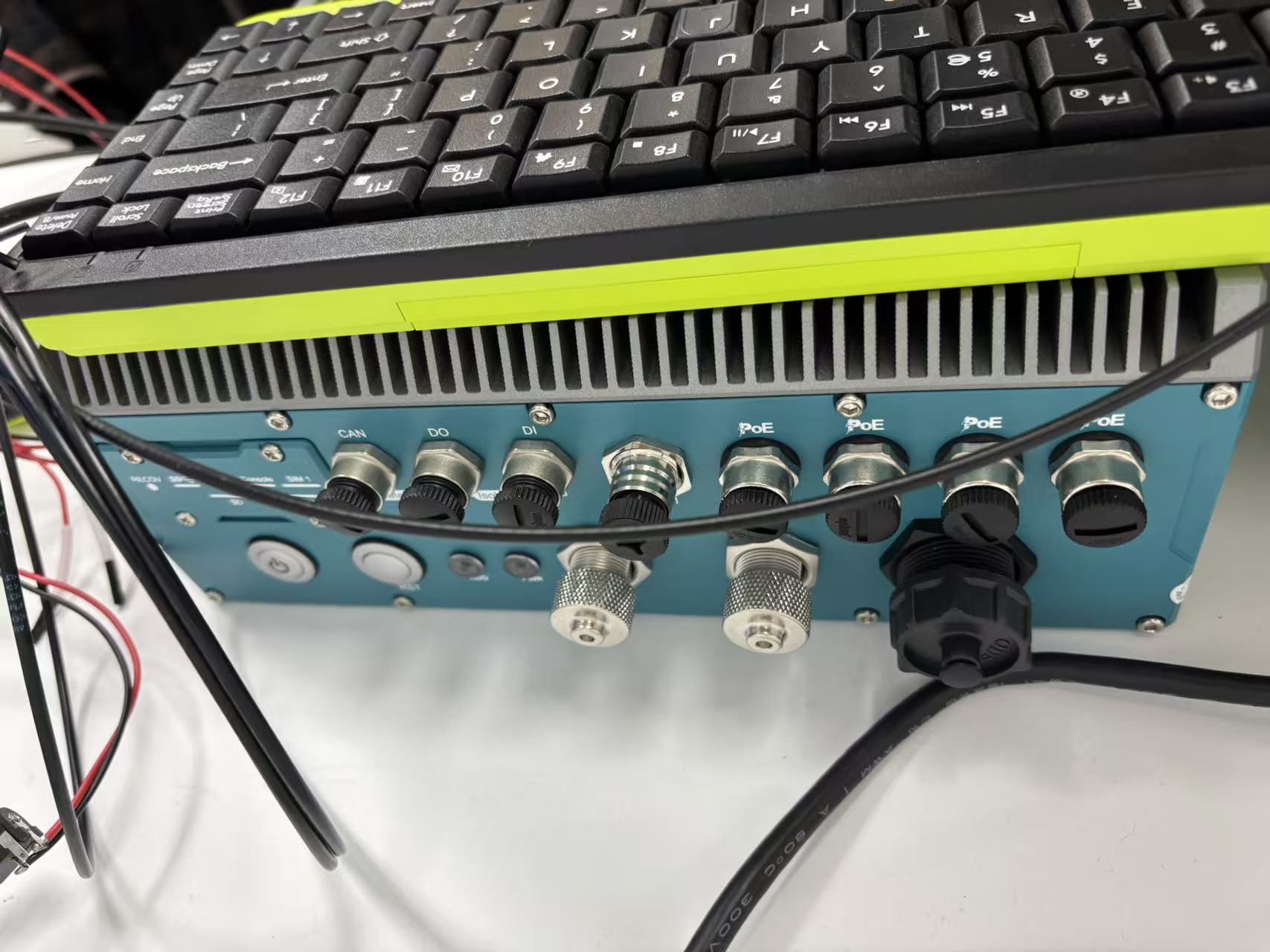
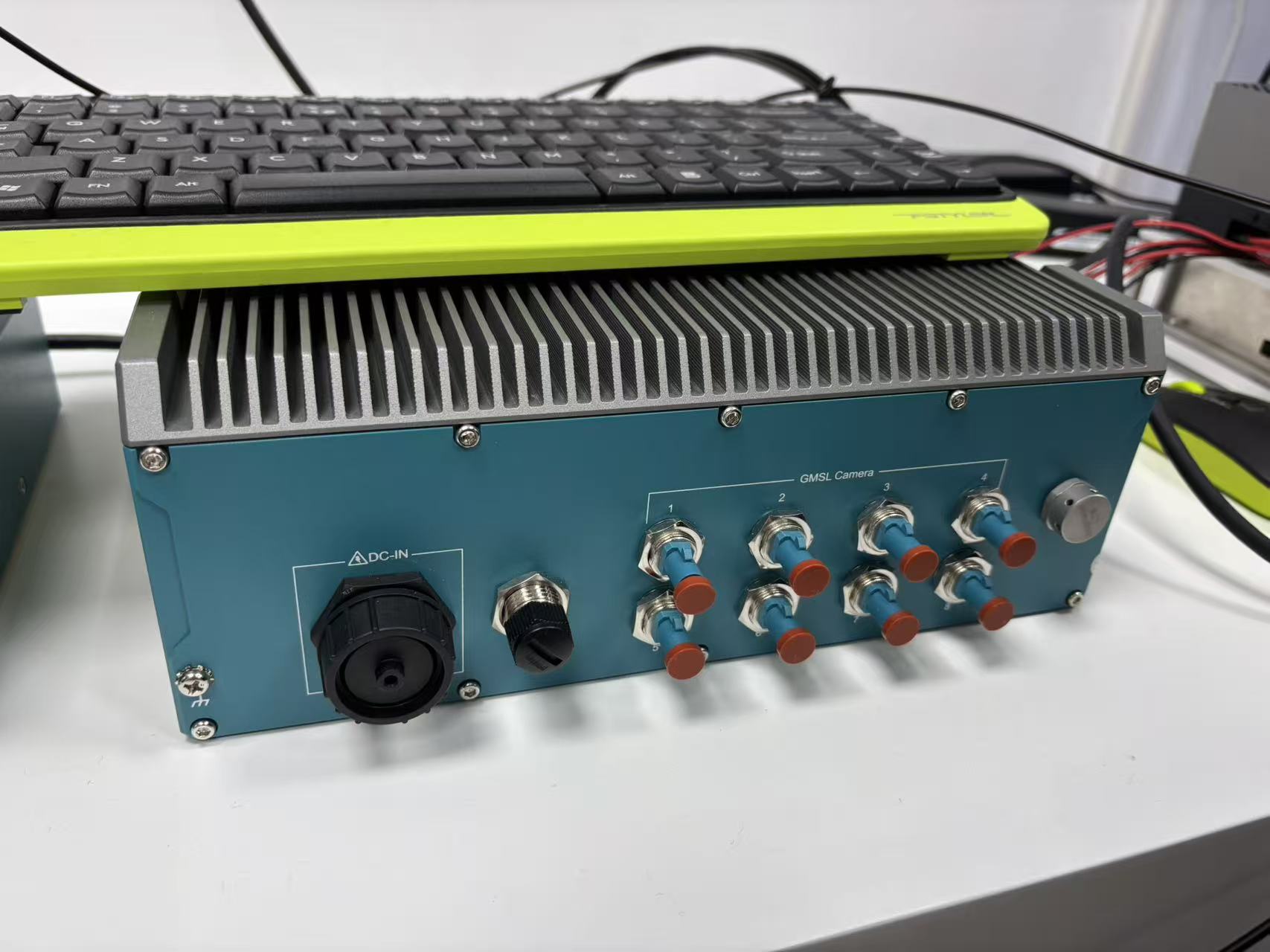
Acquisition Channels: Supports synchronous acquisition from up to 8 GMSL cameras, compatible with mainstream 1080P/60fps and 2K/30fps automotive cameras.
-
Synchronization Accuracy: Hardware frame synchronization for multi-channel cameras, with a frame timing deviation of <1μs, eliminating surround view stitching misalignment.
-
Processing Latency: FPGA hardware pipeline preprocessing, with microsecond-level latency per frame, significantly lower than pure software solutions.
-
Stability: Long-term continuous acquisition without frame loss, screen tearing, or timing errors, adapting to complex automotive electromagnetic environments.
-
Preprocessing Capability: Hardware real-time image denoising, color correction, resolution scaling, and histogram equalization.
-
Data Output: Supports high-speed DMA transfer, local caching, and real-time Gigabit/10 Gigabit Ethernet transmission.
-
Scalability: Supports online configuration of frame rate, resolution, and preprocessing parameters, enabling rapid integration with AI perception algorithms.
3. Overall System Architecture Design
Based on the typical Zynq MPSoC heterogeneous architecture, a layered design is adopted with PL hardware parallel acquisition acceleration + PS multi-core software application processing. This decouples software and hardware, allowing each to perform its specialized tasks and maximizing the heterogeneous computing power advantages of MPSoC.
3.1 FPGA (PL-side) Core Hardware Layer
The PL side, as the real-time core of the system, executes entirely through a hardware pipeline, free from system scheduling jitter:
-
GMSL Decoding Module: Parses multi-channel coaxial serial video signals, performing serial-to-parallel conversion and video data recovery.
-
Global Frame Synchronization Module: Provides a unified clock reference and outputs synchronous trigger signals to enable simultaneous exposure and acquisition for multiple cameras, ensuring complete alignment of image frame headers across all channels.
-
Multi-level Frame Buffer Architecture: Establishes a ping-pong frame buffer array to resolve bandwidth conflicts for large multi-channel data and prevent data overflow.
-
Hardware Image Preprocessing IP: Parallelly implements denoising, scaling, color correction, and histogram equalization.
-
High-Speed DMA Transfer: Real-time transfers processed image data to PS-side memory via the HP high-speed bus.
3.2 ARM (PS-side) Core Application Layer
The PS side, based on a Linux system, leverages multi-core computing power for flexible application scheduling without interfering with the underlying real-time timing:
-
Camera Parameter Configuration: Online adjustment of resolution, frame rate, exposure, and white balance parameters.
-
Preprocessing Algorithm Secondary Optimization: Software fine-tuning of image parameters to adapt to different lighting conditions in automotive scenarios.
-
Data Management: Image data caching, fragmented storage, abnormal frame detection and removal.
-
Data Transmission: Network packaging and real-time upload to the host computer, supporting real-time video stream preview.
-
Status Monitoring: Real-time monitoring of camera connection status, frame rate, latency, and error reporting.
3.3 Overall Data Flow Link
GMSL Coaxial Video Signal → Decoder Chip → FPGA Serial-to-Parallel Parsing → Global Frame Synchronization and Alignment → Hardware Image Preprocessing → Ping-Pong Buffer Caching → DMA High-Speed Transfer → PS-side Memory → Software Optimization/Storage/Upload → Host Computer Real-time Preview and Algorithm Invocation
4. Key FPGA Core Technology Implementation
4.1 Multi-Channel GMSL Hardware Frame Synchronization Solution
The core challenge of multi-channel surround view imaging is timing synchronization. In traditional solutions, each camera operates independently, with random frame start times, directly leading to ghosting, misalignment, and distortion in surround view stitching.
This system establishes a global clock synchronization unit on the PL side. By outputting a unified frame trigger signal from the FPGA, all GMSL cameras are synchronously driven for exposure and acquisition. The image frame headers of all channels are perfectly aligned, eliminating multi-channel timing deviations at the hardware level and meeting the high-precision timing requirements for automotive surround view and stereo vision.
4.2 Multi-Channel Ping-Pong Frame Buffer Array Design
Simultaneous transmission of 8 channels of 1080P HD video generates extremely high instantaneous bandwidth. A single-buffer architecture is highly prone to data overwriting, frame loss, and screen tearing. This design addresses the characteristics of multi-channel video by implementing a multi-channel independent ping-pong frame buffer array:
-
Each camera channel is configured with an independent dual frame buffer, allowing parallel acquisition and read/write operations.
-
Inter-channel bandwidth isolation prevents a single channel anomaly from affecting the global data flow.
-
An automatic frame verification mechanism discards incomplete or abnormal frames, ensuring image integrity.
This architecture completely resolves the bandwidth congestion and data overflow issues of multi-channel HD GMSL video, ensuring 24/7 stable acquisition.
4.3 Pipelined Hardware Image Preprocessing
To reduce system latency and alleviate the PS-side computing burden, all basic image preprocessing operations are implemented on the FPGA side using a pipelined parallel architecture, achieving continuous processing at a single-pixel clock level without pauses or accumulated delays:
-
Image Denoising: Hardware implementation of Gaussian and mean filters to remove salt-and-pepper noise and high-frequency interference in automotive environments.
-
Resolution Scaling: Supports arbitrary image scaling ratios to adapt to different algorithm input sizes.
-
Color Correction: Corrects color cast in automotive backlight and low-light scenarios, improving image quality.
-
Histogram Equalization: Enhances image details in low-light scenarios, improving nighttime automotive perception.
4.4 High-Speed DMA Bandwidth Optimization
The MPSoC PL and PS are connected via the HP high-speed bus to a DMA controller. Configuring an ultra-large burst transfer length reduces bus interaction times, significantly improving image data transfer efficiency. Additionally, a dynamic bandwidth allocation mechanism is designed to prioritize critical channel video transmission, preventing frame rate drops and increased latency under high loads.
5. PS-side Software System Design
5.1 Device Driver Adaptation
Based on a custom Petalinux system, dedicated GMSL acquisition drivers and DMA transfer drivers are developed to enable power-on initialization, parameter configuration, and data channel binding for PL-side hardware devices. This allows the user layer to directly call hardware resources without tedious low-level adaptation.
5.2 Multi-threaded Application Architecture
A multi-threaded separation design is adopted to avoid frame rate drops caused by application blocking:
-
Data Reading Thread: Real-time reading of DMA-transferred image data to ensure no data accumulation.
-
Image Processing Thread: Software secondary optimization and adaptive parameter adjustment.
-
Network Transmission Thread: Packages and pushes video streams to ensure real-time preview on the host computer.
-
Device Monitoring Thread: Real-time detection of camera status, frame rate, latency, and abnormal alarms.
5.3 Adaptive Parameter Adjustment
For automotive scenarios with drastic day-night lighting changes, the software implements automatic exposure and automatic white balance parameter fine-tuning to adapt to complex automotive conditions such as strong light, low light, and backlight, ensuring stable image quality around the clock.
6. Automotive Anti-Interference and Stability Optimization
Automotive environments are subject to strong electromagnetic interference, voltage fluctuations, and high/low temperature variations. This system has undergone comprehensive industrial-grade optimization for automotive scenarios:
-
GMSL coaxial transmission shielding design to suppress high-frequency electromagnetic interference from automotive motors and power supplies.
-
FPGA-side data fault tolerance verification, automatically correcting transmission errors and incomplete frames.
-
Strict power-up timing constraints to prevent multi-channel camera startup timing misalignment.
-
Abnormal reconnection mechanism, allowing cameras to automatically resume acquisition after momentary disconnections without affecting system operation.
-
High and low temperature adaptation optimization to ensure stable timing and image quality under extreme automotive temperatures.
7. System Actual Performance Verification
An automotive actual test platform was set up to conduct comprehensive performance testing of the system:
-
Synchronization Performance: 8-channel camera frame synchronization deviation consistently <1μs, with no misalignment or ghosting in surround view stitching.
-
Latency Performance: Total latency for single-channel 1080P/60fps image acquisition + preprocessing <20ms, meeting the low-latency requirements of autonomous driving.
-
Stability: 72 hours of continuous power-on operation without frame loss, screen tearing, or system freezes.
-
Image Quality Effect: Significantly reduced image noise after preprocessing, clear details in low light, and excellent color correction.
-
Bandwidth Performance: Stable bandwidth under multi-channel full-load conditions, no data congestion, and no frame rate degradation.
8. Solution Advantages and Innovations
-
Hardware-level Precise Synchronization: Global unified timing trigger completely solves the pain point of multi-channel GMSL camera timing misalignment, suitable for high-precision surround view imaging.
-
Software-Hardware Collaborative Low Latency: FPGA pipeline preprocessing + PS multi-core scheduling results in significantly lower latency than pure software acquisition solutions.
-
High Bandwidth Stable Transmission: Ping-pong buffer array + DMA bandwidth optimization ensures no frame loss or stuttering under multi-channel full load.
-
Automotive Industrial-Grade Reliability: Specialized optimization for automotive electromagnetic interference and temperature fluctuations, adapting to complex automotive operating conditions.
-
Highly Customizable and Scalable: Freely configurable number of channels, resolution, and preprocessing algorithms to adapt to various automotive vision devices.
9. Application Scenarios
-
Automotive 360° Panoramic Surround View Imaging Systems
-
Autonomous Driving Multi-Camera Perception Data Acquisition Equipment
-
Automotive Driving Safety Monitoring and Blind Spot Monitoring Equipment
-
Automotive Vision Algorithm Training Data Acquisition Platforms
-
Smart Cockpit Multi-Screen Video Acquisition and Streaming Systems
10. Summary and Future Expansion Directions
This article presents the design and implementation of a multi-channel GMSL camera synchronous acquisition and low-latency image preprocessing system based on the Zynq MPSoC heterogeneous architecture. Leveraging the high parallelism and hard real-time characteristics of the PL-side FPGA, it addresses the engineering pain points of traditional solutions such as multi-channel timing asynchrony, high latency, easy frame loss, and poor image quality. Utilizing the multi-core ARM on the PS side, it achieves flexible parameter configuration, status monitoring, and data streaming, perfectly meeting the high-precision, low-latency, and high-stability requirements of automotive vision. The entire solution offers controllable cost, strong customizability, and high industrial stability, making it directly applicable to various intelligent automotive vision devices.
❤️ Focusing on Zynq MPSoC, GMSL automotive vision, FPGA image acceleration, and embedded heterogeneous development! Like and bookmark for continuous updates on complete automotive industrial vision engineering solutions and source code!