Energy Storage Coordinated Controller Solution Based on DSP+ARM+FPGA Architecture, Supporting Full Domestic Localization
#arm开发#fpga开发#架构
The Energy Storage Coordinated Controller Solution, based on a DSP+ARM+FPGA architecture, achieves high-performance control and real-time response through the collaborative operation of multi-core heterogeneous processors. Its core design and functions are as follows:
I. Hardware Architecture Design
-
Multi-core Heterogeneous Division of Labor
- ARM: Runs the Linux system, responsible for strategy computation (e.g., charge/discharge scheduling, economic optimization) and communication protocol stack management13.
- DSP: Processes fast control algorithms (e.g., primary frequency regulation/dynamic reactive power voltage regulation), achieving microsecond-level response (frequency regulation action time ≤20ms)35.
- FPGA: Executes high-speed signal acquisition (1MSPS sampling rate) and real-time logic control, supporting optocoupler-isolated signal channels with anti-interference capability up to 4kV/2kV (common mode/differential mode)15.
-
High-Precision Acquisition Module
- Adopts a 16-bit ADC chip, with voltage/current measurement error <0.5%, meeting power-grade precision requirements15.
-
Redundant Communication Interfaces
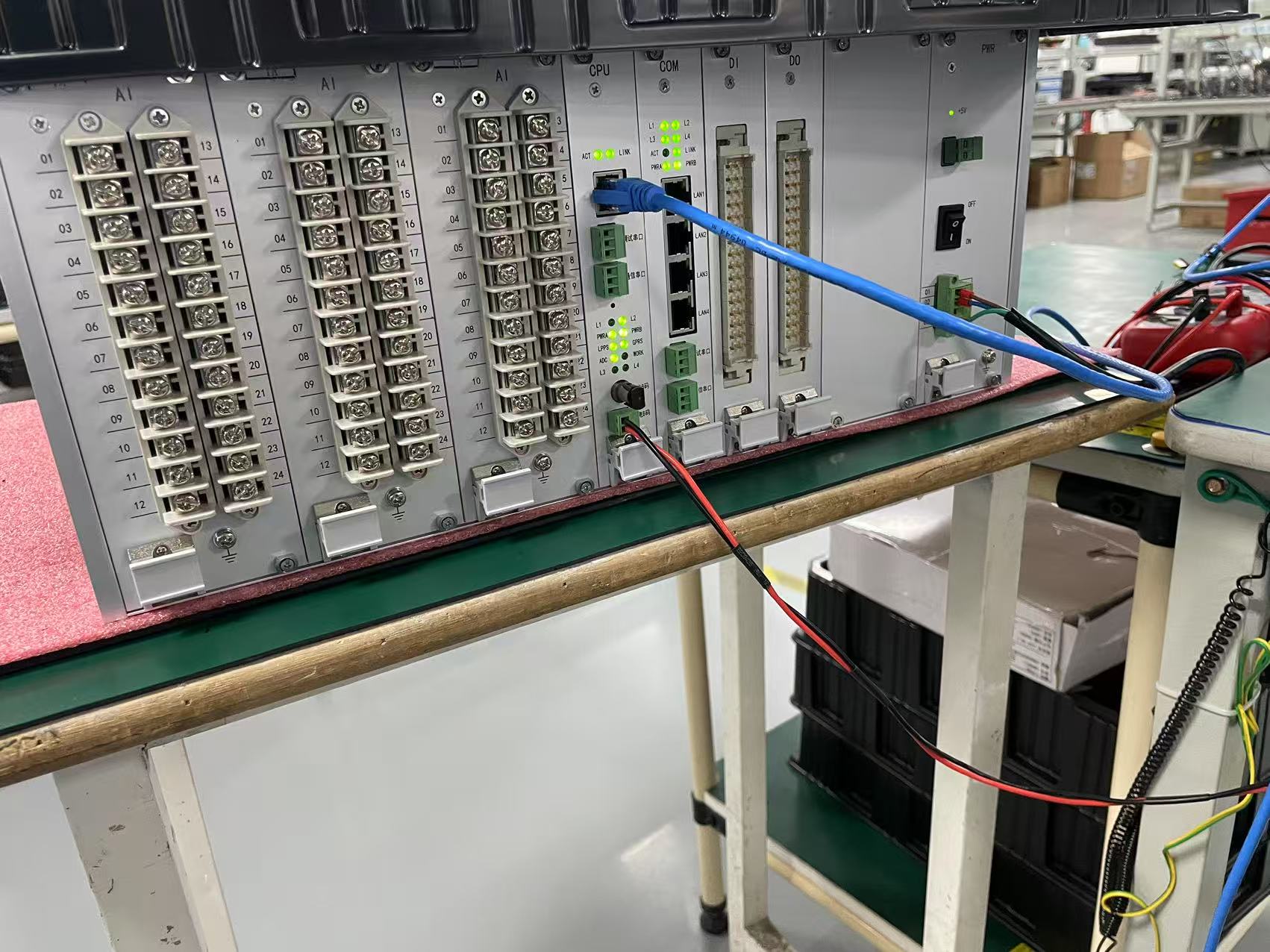
- Integrates dual Gigabit Ethernet ports, RS-485, and CAN bus, supporting Modbus, EtherCAT, and GOOSE protocols (end-to-end latency <10ms)13.
- Integrates dual Gigabit Ethernet ports, RS-485, and CAN bus, supporting Modbus, EtherCAT, and GOOSE protocols (end-to-end latency <10ms)13.
II. Core Control Functions
-
Grid Support Capability
- Primary Frequency Regulation (AGC): Response time ≤20ms, rapidly suppresses grid frequency fluctuations3.
- Dynamic Reactive Power Voltage Regulation (AVC): Real-time regulation of reactive power to stabilize voltage fluctuations13.
- Inertia Support: Enhances grid disturbance resistance3.
-
Energy Management Optimization
- Combines Model Predictive Control (MPC) and deep learning algorithms to generate charge/discharge strategies based on peak/valley electricity prices and PV output forecasts, reducing energy costs by 15%-30%14.
- Smooths renewable energy fluctuations, increasing absorption rate by 40%14.
-
Multi-device Coordinated Control
- A single controller supports coordination of 128 PCS units, achieving dynamic matching of source-grid-load-storage through intelligent SOC balancing algorithms3.
III. Safety and Reliability Design
-
Fault Protection Mechanism
- Real-time detection of overcharge/over-discharge/short circuit, triggering protection actions (response time <100ms)14.
- Dual redundant verification (CRC + parity check), with a data error rate <10⁻⁹15.
-
System Fault Tolerance
- Supports island mode operation switching (latency <500ms), ensuring power supply to critical loads4.
IV. Expanded Application Scenarios
- Grid-side: Participates in frequency and voltage regulation, enhancing stability34.
- Industrial and Commercial Parks: Achieves peak shaving and valley filling, and demand control, reducing electricity costs4.
- Microgrid: Compatible with multi-source coordination of PV and diesel generators, supporting off-grid operation45.
V. Advantages of Domestic Localization
- Utilizes fully domestically produced chips (e.g., RK3568+FPGA), reducing costs by 30% compared to imported solutions4, and supports OTA remote upgrades and customized logic configuration5.
- This solution, through a hierarchical control architecture (bottom-layer execution/middle-layer coordination/upper-layer planning)1, combines real-time performance with intelligence, providing core support for highly reliable energy storage systems.