X86-based Industrial PC for Acoustic Monitoring and Analysis
An X86-based industrial PC dedicated to acoustic monitoring and analysis must be designed to combine industrial reliability, high-performance computing, and professional acoustic processing requirements. Below are its key features and application highlights:
I. Core Hardware Configuration Requirements
- High-Performance Processor Utilizes multi-core Intel Core i5/i7 or equivalent processors (e.g., 13th/14th Gen), supporting real-time operation of complex acoustic algorithms (such as noise spectrum analysis, sound source localization) 511.
- Large-Capacity Memory and High-Speed Storage
- DDR5 memory (≥32GB), supporting parallel processing of multi-channel acoustic data 811.
- NVMe SSD (PCIe 4.0 interface), ensuring high-speed data read/write (e.g., 6GB/s image/audio stream caching) 78.
- Professional Expansion Interfaces
- Multiple PCIe slots: supporting acoustic acquisition cards, GPU accelerator cards (for AI voiceprint recognition) 36.
- High-speed network interfaces: 2.5G/10 Gigabit Ethernet ports, enabling synchronized multi-sensor data acquisition and low-latency transmission 714.
II. Industrial Environment Adaptability
- Wide Temperature Operation Supports -20℃ to 65℃ environments, suitable for extreme conditions such as outdoor monitoring stations and factory workshops 34.
- Anti-Interference Design
- Enhanced electromagnetic compatibility (EMC) to prevent industrial equipment interference with acoustic signal accuracy 414.
- Dustproof and waterproof chassis (IP-rated), ensuring long-term stable operation 512.
- Vibration and Shock Protection Reinforced mechanical structure to reduce the impact of equipment vibration on acoustic sensors 512.
III. Dedicated Acoustic Analysis Functions
- Multi-Channel Data Acquisition Supports high-precision MEMS microphone array access, enabling noise source localization and 3D sound field modeling 1114.
- Real-time Algorithm Processing
- Built-in A/C weighting, FFT spectrum analysis, and equivalent continuous sound level (Leq) calculation 14.
- Compatible with acoustic simulation software such as MATLAB and COMSOL, supporting AI noise pattern recognition 11.
- Remote Management and Cloud Collaboration
- 4G/5G modules enable real-time upload of monitoring data to the cloud 79.
- VPro technology supports remote BIOS debugging and system maintenance 7.
IV. Typical Application Scenarios
- Industrial Noise Monitoring Real-time analysis of factory equipment noise (range 30-130dB), with automatic alerts for exceedances 14.
- Environmental Acoustics Research Long-term monitoring of urban traffic noise and soundscapes in ecological protection zones 911.
- Intelligent Medical Diagnosis Combines AI to analyze abnormal breath sounds and heart sounds, assisting remote medical diagnosis 10.
V. Selection Recommendations
| Element | Recommended Configuration | Reference Source |
|---|---|---|
| Processor | Intel i7-13700K (16 Cores, 24 Threads) | 58 |
| Memory/Storage | 64GB DDR5 + 1TB NVMe SSD | 811 |
| Expansion Capability | ≥3× PCIe x16 slots, supporting acquisition cards/GPU | 36 |
| Environmental Protection | Wide temperature -20~65℃, IP54 dustproof and waterproof | 312 |
| Software Compatibility | Pre-installed Linux RTOS or Windows IoT | 613 |
Note: For special scenarios (e.g., blast sound monitoring), custom high-range sensors above 120dB are required, along with reinforced anti-shock design 14.
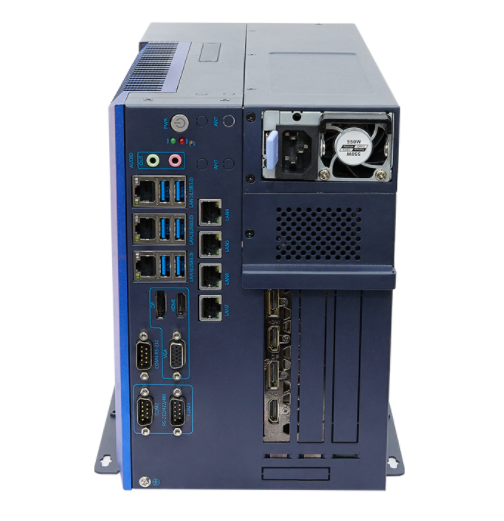
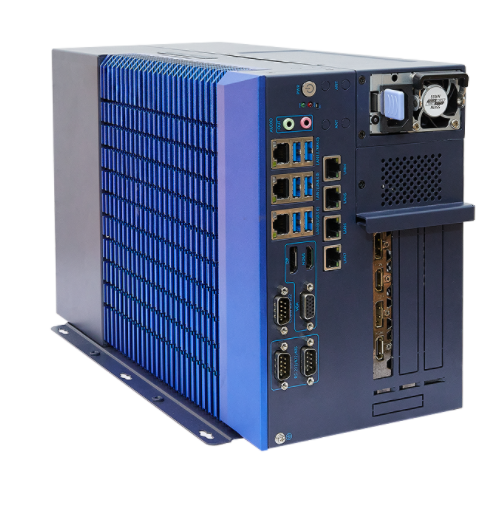
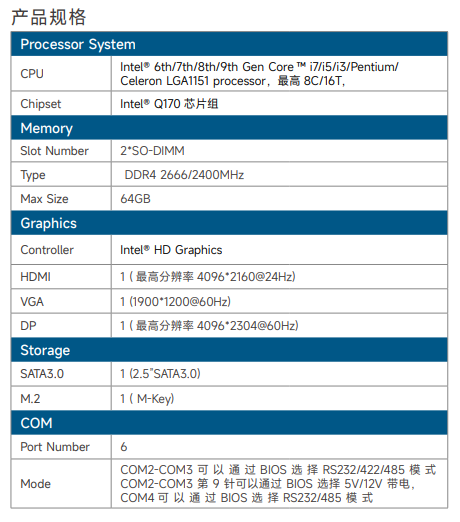
◆Industrial-grade Intel® Q170 chipset, supporting Intel® Xeon®/Core™ desktop processors (6th/7th/8th/9th Gen)
◆2*DDR4 SO-DIMM, max 32GB, dual-channel support
◆VGA, HDMI, and DP interfaces, supporting up to 4K 60Hz resolution
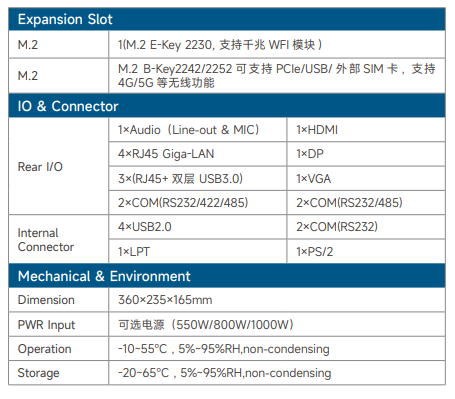
◆1*M.2 B-Key supporting 5G/4G, 1*M.2 E-Key supporting WIFI
◆1*PCIe expansion slot supporting up to 125W graphics card (graphics card length must be less than 230mm)
◆1*M.2 M-Key storage interface, supporting SATA3.0 / NVMe protocol
◆1* 2.5-inch hot-swappable drive bay, built-in one 2.5-inch hard drive, supporting SATA3.0
◆3*Intel high-performance Gigabit Ethernet ports, supporting up to 9 network ports (via daughterboard)
◆4*COM (COM2/3 RS-232/422/485), supporting up to 10 COM ports (via daughterboard)
◆6*USB 3.0 interfaces, supporting up to 14 USB ports
◆Wide voltage power supply DC 9-48V, with short-circuit, over-voltage, and over-current protection