Intel Atom + Artix-7 100T FPGA, CompactRIO Single-Board Controller
Intel Atom + Artix-7 100T FPGA: Inside the NI sbRIO-9628 CompactRIO Single-Board Controller
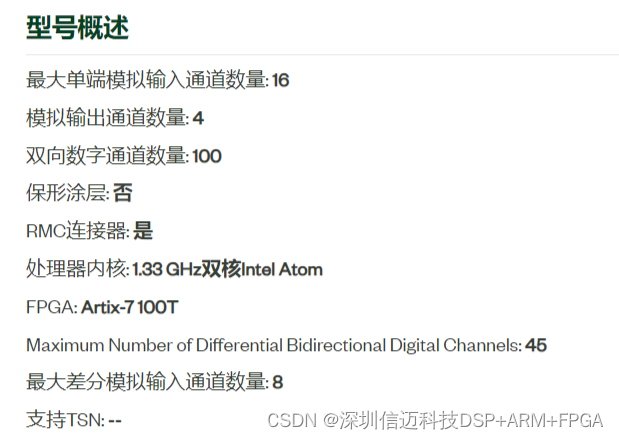
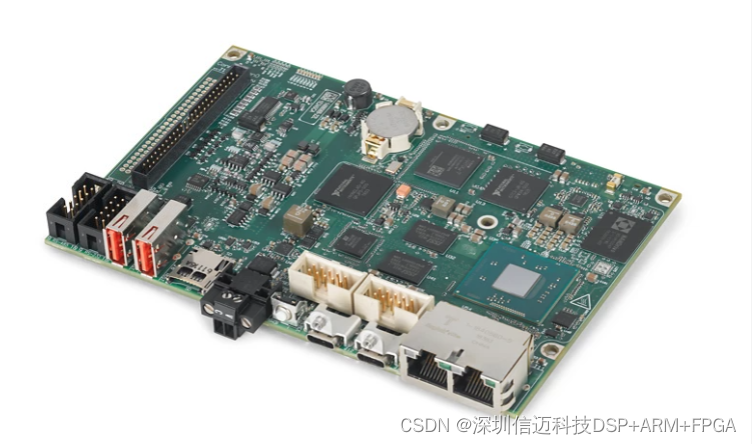
For engineers who need deterministic real-time control combined with the flexibility of user-programmable logic in a single compact form factor, National Instruments' CompactRIO single-board RIO (sbRIO) platform has long been a go-to solution. The sbRIO-9628 sits at the capable end of that lineup, pairing an Intel Atom dual-core processor with a Xilinx Artix-7 100T FPGA — a combination that makes it well-suited for demanding industrial automation, embedded DAQ, and hardware-in-the-loop (HIL) test applications where both processing throughput and I/O timing precision matter.
Architecture: Real-Time Processor Meets User-Programmable FPGA
The sbRIO-9628 runs NI Linux Real-Time, NI's hardened Linux-based RTOS that provides deterministic execution for time-critical control loops while still giving developers access to familiar Linux tooling and networking stacks. Atop this sits the dual-core Intel Atom CPU running at 1.33 GHz, backed by 1 GB of DRAM and 4 GB of onboard storage — enough headroom to host a full application stack, data logging buffers, and user-space services without external storage during routine operation.
What distinguishes sbRIO products from standard embedded Linux boards is the tight coupling between the host CPU and a user-programmable FPGA — in this case, a Xilinx Artix-7 100T. The Artix-7 100T is a mid-range device from Xilinx's 28 nm 7-series family, offering approximately 101,440 logic cells, 240 DSP slices, and 4.86 Mb of block RAM. That resource budget is substantial enough to implement custom I/O timing engines, signal processing pipelines, custom communication protocols, or parallel data acquisition logic entirely in fabric — tasks the CPU either cannot perform with sufficient determinism or would consume too much latency doing in software.
I/O Complement
On the analog side, the sbRIO-9628 provides:
- 16 channels of 16-bit analog input — suitable for sensor acquisition, voltage/current monitoring, and general-purpose signal measurement
- 4 channels of 16-bit analog output — enabling precision setpoint generation, waveform synthesis, or closed-loop actuation signals
The digital side includes 4 channels of 5 V tolerant digital I/O (DIO), which simplifies interfacing with legacy 5 V industrial logic without external level shifters.
Connectivity Ports
Beyond the on-board I/O, the sbRIO-9628 exposes a full complement of industrial communication interfaces:
| Interface | Notes |
|---|---|
| Gigabit Ethernet | High-speed LAN for data offload, remote monitoring, EtherNet/IP |
| CAN | Common in automotive and industrial fieldbus topologies |
| USB | Peripheral attachment, storage, and programming |
| Serial (RS-232/RS-485) | Legacy instrument and device communication |
| SDHC | Removable storage for data logging or field firmware updates |
| DisplayPort | Video output for operator HMI panels or embedded display applications |
The inclusion of DisplayPort is worth calling out — it enables direct connection to a monitor or panel display, opening the door to embedded HMI applications running directly on the controller without a separate display PC.
RIO Mezzanine Card (RMC) Connector
A key differentiator of the sbRIO-9628 versus other single-board computers is its RIO Mezzanine Card (RMC) connector. The RMC interface provides a direct, high-bandwidth path between the processor subsystem and expansion mezzanine cards, bypassing the latency and throughput limitations of USB or PCIe bridges that would be typical in off-the-shelf SBC expansion designs. This makes the RMC connector suitable for connecting custom I/O, high-speed data acquisition mezzanines, or proprietary interface hardware that requires tight timing coupling with the FPGA fabric or CPU.
Positioning: SBC and SOM Use Cases
NI positions the sbRIO product line for use both as a single-board computer (SBC) — a standalone controller running a complete application — and as a system-on-module (SOM) that can be integrated into a custom carrier board designed around the sbRIO's connectors. The SOM deployment model is particularly valuable for OEMs building volume products: the sbRIO-9628 handles the complex high-speed board design (DRAM routing, FPGA power sequencing, clock distribution), while the custom carrier board focuses on application-specific I/O and mechanical integration.
Practical Considerations
Engineers evaluating the sbRIO-9628 typically develop FPGA personality and real-time application code using NI LabVIEW with the LabVIEW FPGA Module and LabVIEW Real-Time Module. The FPGA target is programmed via a bitfile compiled from LabVIEW FPGA code and deployed over the network or USB. For teams preferring HDL-based design, NI also supports component-level FPGA integration, though the primary workflow remains LabVIEW-centric.
The combination of a capable Artix-7 100T fabric, deterministic NI Linux Real-Time, analog and digital I/O on a single board, and the RMC expansion path makes the sbRIO-9628 a compact but capable platform for applications such as machine control, embedded test fixtures, motor drive control, power electronics monitoring, and rapid prototyping of real-time control algorithms.
Linux® is a registered trademark of Linus Torvalds, used on this page under sublicense from LMI, the exclusive licensee of Linus Torvalds worldwide.