RK3588 Machine Vision End-to-End Low-Latency Optimization | Full-Link Solution for Acquisition-Preprocessing-Inference-Display, Integrated R&D and Manufacturing
RK3588 Machine Vision End-to-End Low-Latency Optimization | Full-Link Bottleneck Resolution for Acquisition-Preprocessing-Inference-Display
Tags: RK3588, Machine Vision, Low Latency, NPU Optimization, RKNN, Zero Copy, Industrial Vision
0. Foreword
Developers who have worked with RK3588 embedded machine vision have likely encountered this problem: NPU inference frame rates are high, but the overall system display latency remains high, typically ranging from 80ms to 150ms, which fails to meet the requirements of industrial real-time quality inspection, AGV navigation, high-speed capture, dynamic tracking, and other scenarios.
Many novice optimizers focus solely on NPU inference speed, overlooking full-link bottlenecks such as image acquisition, memory copying, CPU preprocessing, thread blocking, and screen rendering. End-to-end latency in machine vision is never an issue of a single module but rather a comprehensive loss across the entire data link.
1. First, Understand: Where Exactly Does RK3588 Vision Latency Occur?
Latency breakdown for conventional RK3588 vision solutions (based on actual measurements):
-
Image Acquisition + Memory Copying: 40% (Largest Bottleneck)
-
CPU Image Preprocessing: 25%
-
RKNN Inference Scheduling Stutter: 20%
-
Screen Rendering and Thread Blocking: 15%
In most cases, NPU inference itself accounts for less than 20% of the total latency. Simply optimizing models or increasing frame rates cannot fundamentally solve the low-latency problem. To achieve ultra-low latency, the entire link must be addressed one by one.
2. Core Full-Link Latency Optimization Solutions (Practical Insights)
2.1 Acquisition Layer Optimization: Eliminate Redundant Copies, Enable Zero-Copy Transfer
Standard OpenCV VideoCapture acquisition has critical issues: frequent memory allocation, CPU frame copying, and buffer accumulation, leading to severe frame latency, screen stuttering, and timing misalignment in high-speed scenarios.
Production-Grade Optimization Solutions:
-
Discard native OpenCV acquisition; switch to GStreamer hardware streaming pipelines to directly output frames using the RK3588 hardware ISP, avoiding CPU forwarding overhead.
-
Enable V4L2 zero-copy mechanism, allowing image data to be written directly from the camera ISP to NPU video memory, bypassing user-space memory copying.
-
Reduce buffer queue size, disable frame buffer accumulation, process only the latest frames, and eliminate the problem of "processing old frames, accumulating latency."
Optimization effect: Single-frame acquisition latency reduced from 40-60ms to under 10ms.
2.2 Preprocessing Layer Optimization: Hardware Acceleration Replaces CPU Floating-Point Operations
Traditional preprocessing (Resize, normalization, color space conversion, denoising) is entirely performed by the CPU. ARM CPU's weak floating-point performance is the second biggest killer of latency.
RK3588-Specific Optimization Strategies:
-
Utilize RGA hardware acceleration for image scaling, cropping, and color space conversion, completely offloading CPU pressure.
-
Merge preprocessing logic, reduce loop iterations, and remove redundant image dimension transformations.
-
Fix model input dimensions, disable dynamic resizing, and pre-configure preprocessing parameters.
-
Simplify redundant algorithms for industrial scenarios, retaining only core logic for denoising, enhancement, and correction.
Optimization effect: CPU preprocessing time reduced from 20-30ms to under 5ms, while CPU utilization drops by 60%, preventing secondary latency caused by overheating and frequency reduction.
2.3 NPU Inference Layer Optimization: RKNN Extreme Scheduling Tuning
Many developers achieve target RKNN inference frame rates, but experience high latency, primarily due to unreasonable thread scheduling and incorrect inference mode configuration.
Production-Level Tuning Parameters:
-
Enable RKNN_NPU_CORE_AUTO for automatic core scheduling, fully leveraging the RK3588's triple-core NPU compute power.
-
Enable precise INT8 quantization, forgo FP16 high-precision redundancy, boosting speed by 40%+.
-
Set single-frame inference, prohibit batch accumulation, and enable synchronous low-latency inference mode.
-
Disable model inference logs and redundant visualization output to reduce thread blocking.
-
Bind NPU inference processes to the large A76 cores to increase process scheduling priority.
Key insight: High frame rate ≠ Low latency. Batch inference can increase FPS but accumulates frame latency. Batch inference must be disabled for low-latency scenarios.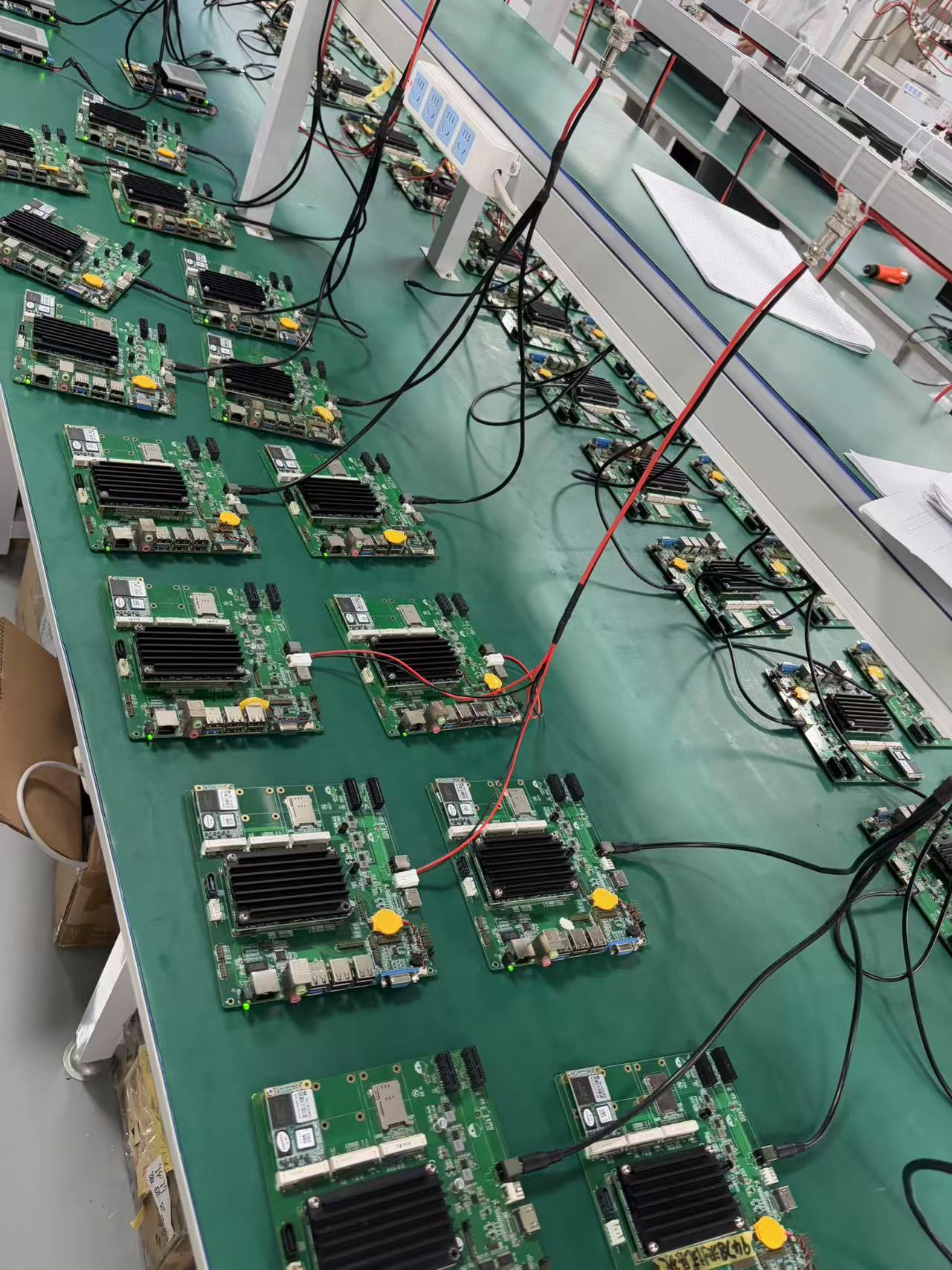
2.4 System-Level Optimization: Flatten Kernel Scheduling Latency
Embedded systems typically use a general-purpose kernel scheduling policy, which has poor real-time performance and can lead to random latency fluctuations in high-speed scenarios.
Extreme Optimization Operations:
-
Apply an RT real-time patch to the RK3588 system to enable real-time kernel scheduling.
-
Increase the priority of vision inference processes, block background logs, updates, and background process preemption.
-
Disable CPU power-saving frequency scaling mode, locking the CPU to its highest clock speed.
-
Disable automatic screen sleep and background service auto-start to reduce system resource contention.
2.5 Rendering Output Layer Optimization: Eliminate Display Latency
OpenCV's native imshow rendering is extremely inefficient, with significant frame buffer refresh latency, a common latency bottleneck often overlooked by beginners.
Optimization Solutions:
-
Replace OpenCV rendering with Framebuffer hardware rendering.
-
Asynchronously render inference results, separating inference threads from display threads.
-
Disable redundant image scaling and secondary color processing, refreshing directly from video memory.
3. Core Optimization Code Snippets (Directly Reusable)
The following are core code snippets for RK3588 low-latency vision optimization, including RGA acceleration, high-priority inference, and zero-copy adaptation logic, suitable for all vision tasks such as YOLO, OCR, and segmentation.
Test Environment: RK3588, 1080P industrial camera, YOLOv8s model, default system at normal temperature.
5. Summary of Common Latency Pitfalls
- Pitfall 3: Extensive use of CPU for preprocessing → Weak ARM CPU compute power, highly prone to latency accumulation.
6. Applicable Scenarios
- Dynamic target tracking, crowd counting, behavior recognition
Sienovo provides customized RK3588+FPGA+AI solutions and integrated R&D and manufacturing services.