RK3588+FPGA-based Drone Flight Control System, Featuring AI Computing Power, FPGA Real-time Capabilities, Powerful Image Processing, and Full Domestic Localization
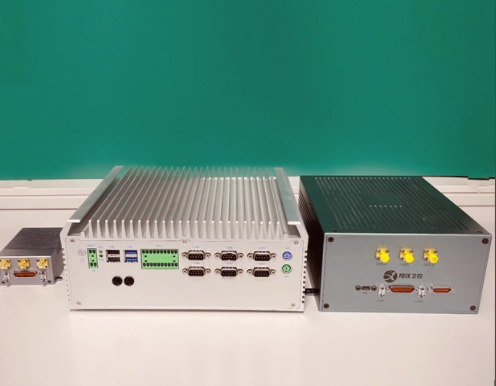
The RK3588+FPGA-based drone flight control system combines the AI computing power of ARM processors with the real-time hardware acceleration capabilities of FPGAs, offering significant advantages in flight control, image processing, and communication transmission. Below are the core technical features and application implementations of this solution: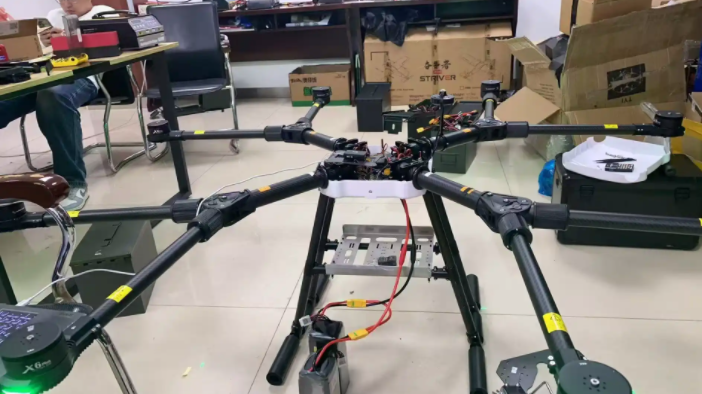
I. Hardware Architecture Design
-
Main Control Chip Collaboration
- RK3588: Utilizes an 8nm process with a quad-core A76 + quad-core A55 architecture, integrating 6TOPS NPU computing power. It supports 8K video encoding/decoding and multi-camera input, meeting the demands for flight control computation and AI tasks12.
- FPGA: Interconnected with RK3588 via PCIe 3.0, it enables hardware-level signal pre-processing (e.g., DMA acceleration, image stabilization compensation), reducing the main controller's load and enhancing real-time performance34.
-
Interface Expansion Capabilities
- Supports MIPI CSI, USB3.0, RS485/232, and other interfaces, allowing connection to cameras, sensors, and wireless video transmission modules15.
- FPGA provides flexible I/O expansion, supporting multi-channel video synchronous acquisition and low-latency transmission (e.g., 1080P@60fps)45.
II. Key Technologies of the Flight Control System
-
Real-time Flight Control
- Based on an AMP (Asymmetric Multi-Processing) architecture, the main core runs a Linux system, while the auxiliary core runs an RTOS to handle high real-time tasks (e.g., attitude estimation, PID control), with FPGA assistance achieving microsecond-level response45.
- Supports EtherCAT communication protocol, meeting industrial-grade control precision requirements4.

-
AI Vision and Tracking
- NPU accelerates YOLO series models, enabling drone object detection (e.g., ships, vehicles) and multi-object tracking (using the ByteTrack algorithm)15.
- FPGA implements image enhancement (3DNR, defogging) and shake compensation, improving recognition accuracy in complex environments13.
-
Wireless Video Transmission Optimization
- Supports H.265 hardware encoding, with end-to-end transmission latency as low as 30-60ms, enabling stable transmission of 1080P video streams over narrow-band channels (500Kbps~2Mbps)1.
- Multi-channel video fusion technology ensures smooth footage, supporting multi-source inputs such as SDI/MIPI1.
III. Typical Application Scenarios
- Industrial Inspection: Achieves automatic tracking of targets up to 15km away using a dual-sensor gimbal (visible light + infrared), with an endurance of over 2 hours1.
- Agricultural Plant Protection: Features 3D vision-based obstacle avoidance and path planning, supporting high-altitude irrigation and pest/disease monitoring56.
- Emergency Search and Rescue: FPGA+NPU collaboratively process 1080P real-time video streams for rapid localization of trapped personnel45.
IV. Domestic Localization and Reliability
- Utilizes domestic FPGAs such as Unigroup Guoxin to replace ZYNQ, adapts to domestic operating systems like Galaxy Kylin, and has passed -40℃~85℃ industrial temperature range tests24.
- Lightweight design (core board size 45×50mm) and a fully enclosed heat dissipation solution adapt to complex electromagnetic environments12.
This solution, through its heterogeneous computing architecture and hardware acceleration technology, significantly enhances the real-time performance, intelligence, and reliability of drone systems, making it suitable for military, industrial, and civilian applications.