AM5728-Based Power Quality Monitoring System
With the advancement of science, technology, and industry, many highly automated users are becoming increasingly sensitive to power quality. Any power quality issue can lead to a decline in product quality, or even a halt in engineering operations, causing immeasurable losses to users. Improving power quality can reduce grid losses, extend equipment lifespan, and decrease power production accidents. The management of power quality pollution is inseparable from power quality monitoring. Therefore, accurate and comprehensive power quality monitoring is one of the essential means of power quality management. Compared to foreign countries, China's research and development of power quality monitoring devices is relatively backward. Most domestic manufacturers use microcontroller or industrial PC architectures. While these instruments offer the sole advantage of low cost compared to advanced foreign technologies, they present many problems in practical applications. Therefore, this paper designs a new type of power quality monitoring system using the latest ARM+DSP dual-core architecture chip, AM5728, launched by Texas Instruments (TI). This system can not only achieve online monitoring capabilities by leveraging the DSP's powerful high-speed computing power but also facilitate the development of human-machine interaction interfaces using the ARM processor and Linux operating system. This solution offers high integration, low cost, excellent cost-effectiveness, and market competitiveness, making it highly suitable for the development of actual industrial products.
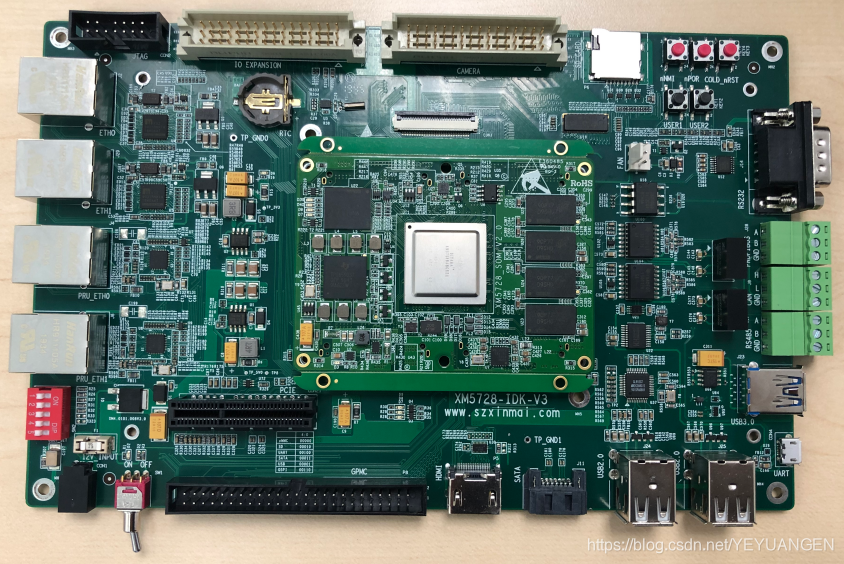
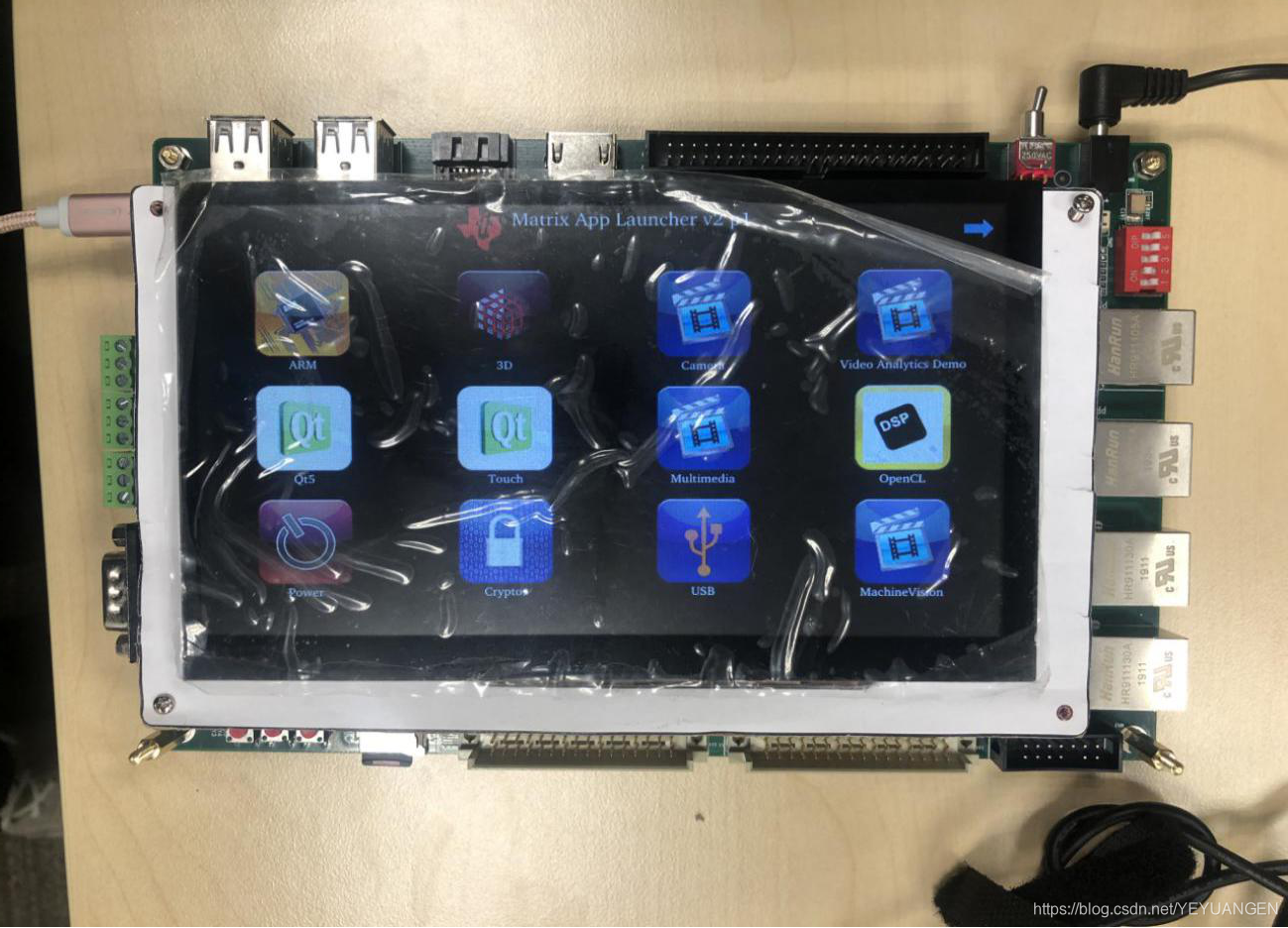
Sienovo (www.szxinmai.com) has developed a powerful industrial control platform based on the TI AM5728 chip. The AM5728 processor includes dual ARM Cortex-A15 and dual C66x floating-point DSPs, offering powerful processing capabilities widely used in industrial automation, machine vision, medical imaging, intelligent transportation, and other application fields.
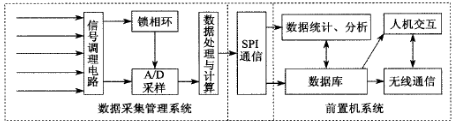
The power equipment online monitoring system consists of temperature online monitoring devices, lightning arrester insulation online monitoring devices, and circuit breaker online monitoring devices. The system covers the monitoring of insulation status parameters for major electrical equipment in substations, featuring numerous monitoring parameters and comprehensive functions. The system can also be flexibly configured, comprising one or two of these devices, and optionally equipped with a transformer oil chromatograph monitoring device (Zhidian Power) when necessary.
System Architecture
System Integration
Through industrial PCs and system integration software, dynamic parameters from various monitoring devices are integrated, establishing a comprehensive database of substation equipment status, automatically generating equipment status parameter reports and trend curves. By performing "horizontal comparisons" of historical equipment status parameters, combining trend analysis with relative comparisons, preliminary diagnoses of equipment status are achieved, providing an open platform for expert diagnostic systems, enabling remote/on-site status monitoring, diagnosis, and evaluation of equipment via the network.
System Features
Flexible configuration, good scalability, comprehensive functions, excellent performance
Accurate measurement, reliable data, easy installation, simple maintenance
Current Research Status
Currently, some technologies and devices in power systems already involve condition monitoring to varying degrees, especially online monitoring systems and fault diagnosis systems. Although these systems can achieve certain condition monitoring objectives, they do not fully meet the requirements of comprehensive condition monitoring. Internationally, condition monitoring has become an active new branch under Non-Destructive Testing (NDT). Since 1989, multiple international conferences on condition monitoring have been held, with numerous research reports and academic papers published annually. In the field of power systems, condition monitoring has also received increasing attention from power sector management, research, operation, and engineering maintenance personnel, gradually becoming an international frontier research topic and hot spot.
Monitoring Methods
Numerous condition monitoring methods have been proposed for different power equipment, many of which are general-purpose, such as vibration analysis, dissolved gas analysis in oil, partial discharge detection, and insulation recovery voltage methods.
Under normal operating conditions, power equipment has an inherent natural vibration level. When fastening screws loosen or change, or when winding or lead structures shift or are disturbed due to short circuits, insulation aging, etc., equipment vibration intensifies. Vibration analysis is a widely used and effective method for monitoring such faults. To monitor equipment vibration levels, acoustic sensors and accelerometers are often used to collect vibration signals. The intensity and vibration patterns of these signals are then analyzed and discriminated to achieve the purpose of equipment condition monitoring.
The measurement of various electrical and non-electrical quantities is achieved by converting optical/electrical and electrical/optical signals. With the development of optoelectronic devices and optical fibers, various fiber optic sensing methods are widely applied in industrial fields.
Photoelectric detection typically involves the sensing part converting the measured signal into an optical carrier signal (i.e., the measured quantity determined by light intensity, or optical wave phase and frequency), which is then transmitted via optical fiber to the receiving end. There, an optical/electrical conversion demodulates the optical carrier signal to recover the measured signal. Many optical physical effects have been used for modulated detection, such as the photoelastic effect for measuring pressure and deformation; the electro-optic effect for measuring electric fields and voltage; the magneto-optic effect (Faraday effect) for measuring magnetic fields and current; and the fluorescence effect for measuring temperature, among others. The use of optical fibers provides powerful tools for these detection methods.
The advantages of photoelectric detection include good insulation performance, overcoming the difficulties of high-voltage insulation, and enabling many physical measurements at high potential locations. Optical signals transmitted via optical fibers are immune to external electromagnetic interference, making them particularly suitable for use in power systems with severe electromagnetic interference. Furthermore, photoelectric detection offers high-frequency response. Optical fibers are also widely used for computer data transmission, forming optoelectronic communication networks.