Understanding `static` and `extern` Qualifiers for Variables and Functions
Understanding static and extern Qualifiers for Variables and Functions
In C and C++ programming, the static and extern qualifiers play crucial roles in managing variable and function scope and linkage. This article will delve into the distinctions between these qualifiers, their usage, and how they can be applied to enhance the organization and functionality of your code.
Global Variables and Functions
Global variables and functions are accessible throughout the entire program. However, their scope can be modified using the static and extern qualifiers.
static Qualifier
The static qualifier is used to limit the visibility of a variable or function to the file in which it is declared. This means that a static variable or function cannot be accessed from other files, which helps prevent naming conflicts and unintended interactions between different parts of a program.
-
Static Variables: When a variable is declared as
staticwithin a function, it retains its value between function calls. This is useful for maintaining state information across multiple invocations of the function. -
Static Functions: A function declared as
staticcan only be called within the same file. This encapsulation is beneficial for organizing code and reducing the risk of name clashes in larger projects.
extern Qualifier
The extern qualifier, on the other hand, is used to declare a variable or function that is defined in another file. This allows for sharing variables and functions across multiple files, which is essential for modular programming.
-
Extern Variables: When you declare a variable as
extern, you are telling the compiler that the variable is defined elsewhere. This is commonly used in header files to allow multiple source files to access the same global variable. -
Extern Functions: Functions declared with the
externqualifier can be called from any file that includes the declaration. This is the default behavior for functions in C and C++, as they are globally accessible unless specified otherwise.
Visual Representation
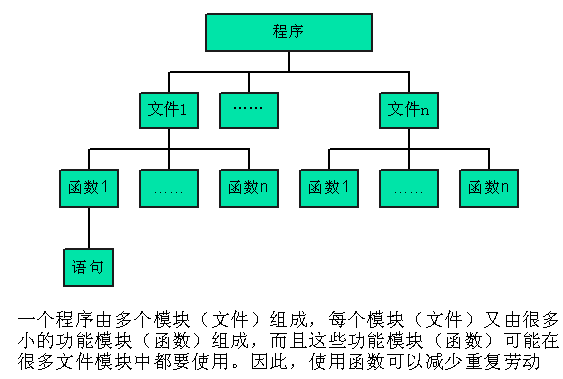
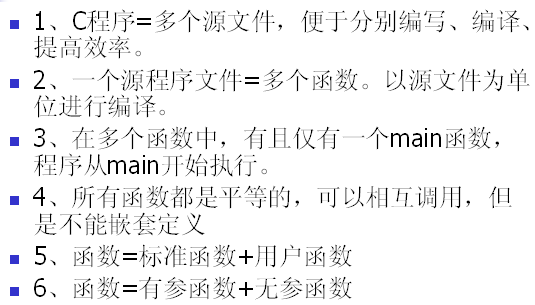
The following diagrams illustrate the scope and linkage of static and extern variables and functions:
Summary
In summary, understanding the static and extern qualifiers is essential for effective variable and function management in C and C++ programming. By using static, you can limit the scope of your variables and functions, enhancing encapsulation and reducing potential conflicts. Conversely, extern allows for sharing variables and functions across multiple files, promoting modularity and code reuse.
Utilizing these qualifiers appropriately will lead to cleaner, more maintainable code and a better-organized project structure.