Complete Solution for Underwater Robots (ROV/AUV) Based on RK3588 with Ultra-Wide Temperature Adaptation
Complete Solution for Underwater Robots (ROV/AUV) Based on RK3588 with Ultra-Wide Temperature Adaptation
Abstract: The operating environment for underwater robots (ROV/AUV) is extremely complex. Scenarios such as deep-sea low temperatures, shallow-water high temperatures due to sun exposure, large day-night temperature differences, and heat accumulation in sealed cabins place extremely high demands on the main control platform's high and low temperature environmental adaptability, computing power stability, and real-time control reliability. Traditional embedded platforms have narrow temperature ranges, experience frequency throttling at high temperatures, fail to start at low temperatures, and suffer from severe operational drift, making them unable to meet the demands of all-weather underwater operations. This article, based on the RK3588 industrial-grade main controller, focuses on the core advantage of stable operation across an ultra-wide temperature range of -40℃ to +85℃. Combining ARM multi-core computing power, edge AI inference, RT-Linux/Xenomai hard real-time systems, underwater machine vision, and low-latency motion control, we have developed a deployable underwater robot solution adaptable to all operating conditions. It is perfectly suited for all underwater operation scenarios, including polar low temperatures, summer high temperatures, deep-sea constant temperatures, and shallow-water variable temperatures.
Keywords: RK3588; Underwater Robots; ROV; AUV; Ultra-Wide Temperature; High and Low Temperature Adaptation; Real-Time System; Underwater Machine Vision; Edge AI
1. Industry Pain Points: Challenges in High and Low Temperature Environmental Adaptation for Underwater Robots
Unlike ordinary terrestrial equipment, underwater robot operations present four core pain points: large temperature differences across all domains, harsh operating conditions, poor heat dissipation in sealed environments, and lack of human intervention:
-
Extreme Cold Scenarios: In polar scientific research and deep-sea operations, water temperatures are consistently below 0℃. Conventional ARM platforms fail to start at low temperatures, DDR operates abnormally, and clock jitter increases, leading to robot disconnection and control failure.
-
High Temperature Heat Accumulation Scenarios: During operations in shallow seas, lakes, or under summer sun exposure, sealed equipment cabins accumulate heat, with internal temperatures potentially exceeding 70℃. General-purpose development boards are highly prone to frequency throttling, crashes, and reboots, causing mission interruptions.
-
Sudden Temperature Change Scenarios: With day-night cycles and transitions between deep and shallow layers, equipment temperatures fluctuate drastically. Ordinary platforms exhibit sampling drift, visual artifacts (screen flickering), and motion control jitter.
-
Long-Term Unattended Operation: Underwater equipment is difficult to maintain, imposing stringent requirements on the main controller for 7x24h stable operation across the entire temperature range, with no temperature drift or frequency throttling.
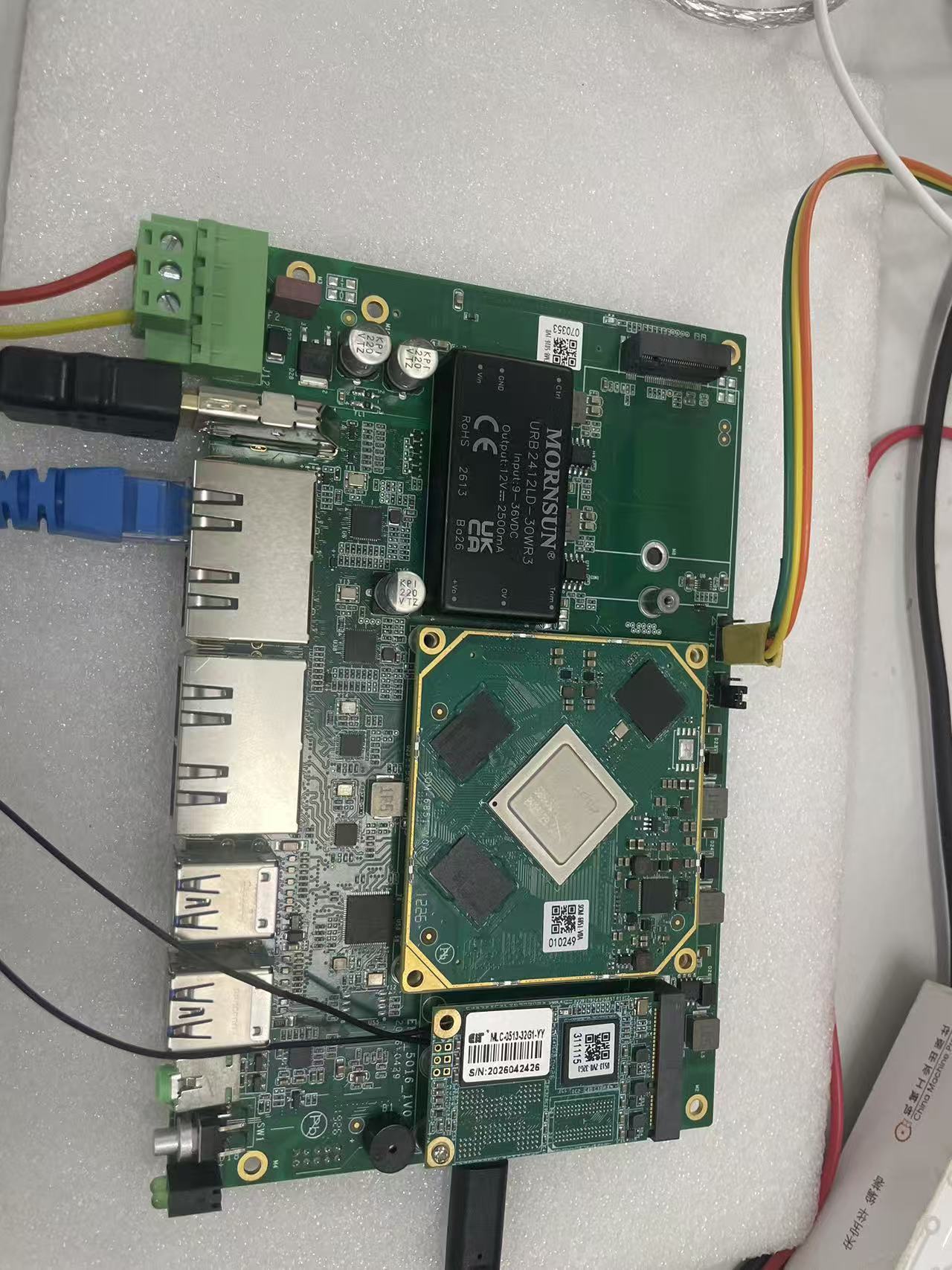
Traditional RK3568, AM62X, and common industrial control boards typically only support a conventional temperature range of 060℃, which cannot cover extreme high and low temperature conditions underwater. In contrast, the **industrial-grade RK3588 core platform supports an ultra-wide operating temperature range of -40℃+85℃**, making it the optimal localized solution for highly reliable main control in underwater robots.
2. RK3588 Ultra-Wide Temperature Hardware Core Advantages (Focus on High and Low Temperature Capabilities)
2.1 Industrial-Grade Ultra-Wide Operating Temperature Specifications
The RK3588 industrial-grade SOM core board has undergone rigorous industrial temperature field testing, with native hardware support for:
Operating Temperature: -40℃ ~ +85℃ (Stable full-function, full-load operation, no frequency throttling, no crashes, no data drift)
Storage Temperature: -40℃ ~ +90℃, capable of withstanding long-term storage in extreme environments and temperature shock.
Compared to conventional industrial control boards (060℃) and ordinary ARM platforms (-2060℃), the RK3588's temperature range covers all underwater extreme conditions, including polar low temperatures, deep-sea constant temperatures, shallow-water high temperatures, and cabin heat accumulation, truly enabling all-season, all-water, all-weather operations.
2.2 High and Low Temperature Operating Condition Stability Mechanism
-
Low Temperature Startup Optimization: Hardware circuit with low-temperature compensation design. Power chips, DDR, and crystal oscillators support stable startup at low temperatures. Normal power-on and startup are possible in extreme cold environments of -40℃, with no computing power degradation.
-
High Temperature Anti-Throttling Design: The core board features a built-in hardware temperature control strategy. Combined with optimized heat dissipation structures in sealed cabins, it intelligently schedules big.LITTLE core computing power during full-load operation at 85℃, preventing forced frequency throttling and system freezes.
-
Full Temperature Range Electrical Stability: Utilizes industrial-