【JETSON+FPGA+GMSL+AI】Why Are More Mobile Robots Choosing GMSL Cameras?
As the autonomous mobile robot (AMR) market expands, application scenarios are extending from indoor warehousing and logistics to outdoor port freight, unmanned mining trucks, and other fields, continuously raising the performance requirements for their vision systems.
In outdoor scenarios, such as automated guided vehicles (AGVs) for port freight, unmanned mining trucks, and smart agricultural machinery, these robots often face harsh and complex working environments, long-distance operations, and high demands for stability and reliability. In indoor environments, such as logistics warehouses, production workshops, and home services, robots need to perform more complex tasks, requiring higher real-time performance and high-resolution images from their vision systems.
Traditional USB cameras, limited by transmission latency, noise immunity, and transmission distance, can no longer meet these requirements.
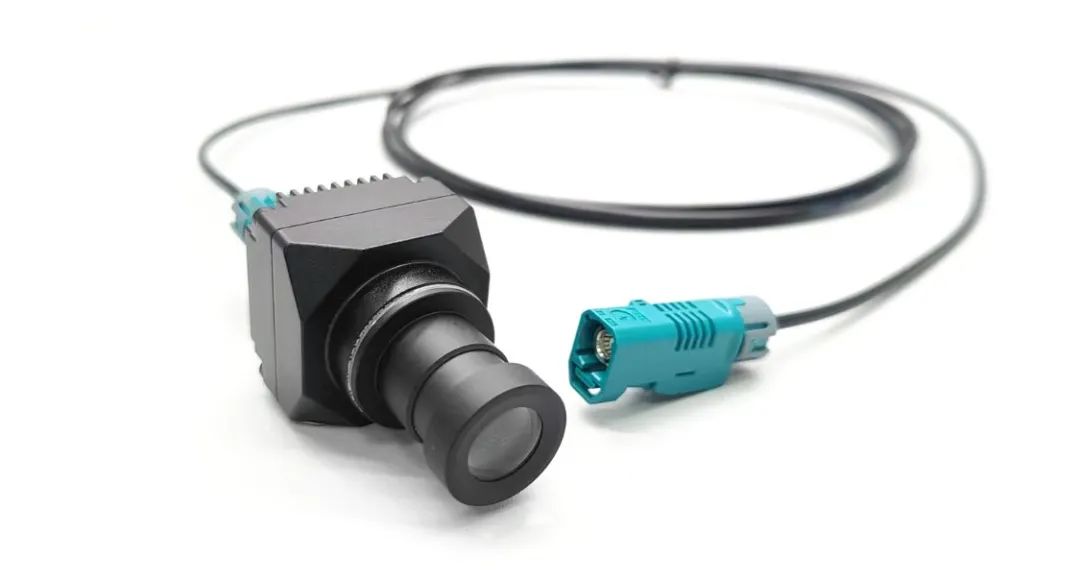
GMSL Cameras
Therefore, an increasing number of mobile robots are opting for GMSL cameras, primarily for the following reasons:
1
Transmission Distance
In mobile robot application scenarios, especially outdoor environments like port freight and unmanned mining trucks, as well as large-scale indoor warehousing, cameras require a certain transmission distance to ensure effective signal delivery.
GMSL cameras support long-distance transmission; for example, GMSL 2 can reach up to 15 meters. This meets the spatial layout requirements of mobile robots in various scenarios, enabling comprehensive perception of the surrounding environment without worrying about signal attenuation or interruption due to excessive distance, thus ensuring the stable operation of the mobile robot's vision system.
2
Transmission Bandwidth
Robots performing tasks require high-resolution images and high-pixel video data. For instance, humanoid robots need to clearly identify various details in their surroundings when performing tasks, and the application of 8MP or even higher-pixel cameras has become a trend.
The high bandwidth of GMSL cameras can meet the demands for high-pixel image transmission. GMSL 2 supports data transfer rates of up to 6Gbps, easily enabling real-time, lossless transmission of high-definition or even 4K/30fps high-resolution images, satisfying the robot's need for precise perception of environmental details.
In contrast, USB cameras have limited bandwidth, which can lead to reduced frame rates and image stuttering at high resolutions, causing robots to respond slowly to environmental changes and affecting operational efficiency and accuracy.
3
Data Latency
In scenarios such as warehousing and logistics, mobile robots need to respond quickly to changes in their surroundings, such as personnel movement, equipment operation, and sudden obstacles. Low-latency visual data is crucial.
Due to protocol and transmission mechanism limitations, USB cameras have relatively high data transmission latency, which can lead to delayed robot decisions and increased collision risks.
GMSL cameras, on the other hand, utilize high-speed serial transmission technology, with data transmission latency as low as less than 1 frame. This allows captured images to be promptly transmitted to the robot's control system, enabling the robot to make quick decisions, such as agile obstacle avoidance in crowded warehouse areas, preventing delayed decision-making due to data latency.
4
Synchronization
Mobile robots performing complex tasks often need to fuse data from multiple sensors, such as LiDAR, ultrasonic sensors, and camera data, for comprehensive environmental perception.
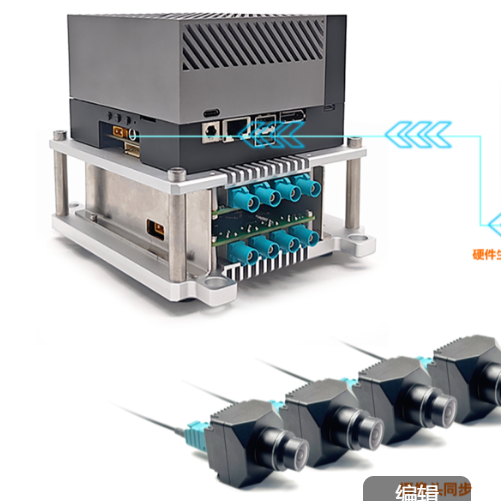
GMSL cameras support hardware synchronization signals, enabling precise synchronization between multiple cameras through external triggers or internal clock synchronization mechanisms. They can also work in precise synchronization with other sensors such as LiDAR, ultrasonic sensors, IMUs, and pressure sensors, ensuring that data collected by each sensor is highly matched in time and space.
Multi-Sensor Fusion Perception Solution
For example, when a robot is handling goods, working in sync with LiDAR can more accurately determine the position and form of the goods. When a humanoid robot performs complex movements, the synchronized fusion of data from various sensors allows for more precise control of limb movements, maintaining balance and coordination. In contrast, USB cameras have poor synchronization between multiple devices, increasing the difficulty and error of multi-sensor fusion.
5
Reliability
Outdoor mobile robots such as those used in port freight, unmanned mining trucks, and agricultural machinery often face complex working environments with extreme high and low temperatures, rain, dust, and bumpy, uneven roads, demanding high reliability for camera operation.
GMSL cameras are designed with a wide operating temperature range in mind, typically functioning stably from -40℃ to 85℃. They do not experience increased image noise, reduced frame rates, or even equipment failure due to temperature issues, whereas ordinary USB cameras struggle to operate stably in such extreme temperatures.
GMSL cameras typically also feature high waterproof and dustproof ratings and excellent shock resistance. Their housings adopt a sealed design to effectively prevent dust from entering internal optical and electronic components. Internal components are mounted using special shock-absorbing materials and fastening methods, such as rubber damping pads and reinforced PCB designs, ensuring stable operation in harsh and complex environments.
6
Connection Stability
Whether in outdoor or indoor mobile robot application scenarios, cameras require continuous and stable connection and data transmission.
Traditional USB interfaces are relatively fragile and prone to loosening or disconnection due to external forces, pulling, or vibration. When unmanned mining trucks operate on bumpy roads or mobile robots are in frequent motion, the connection stability of USB cameras can be challenged.
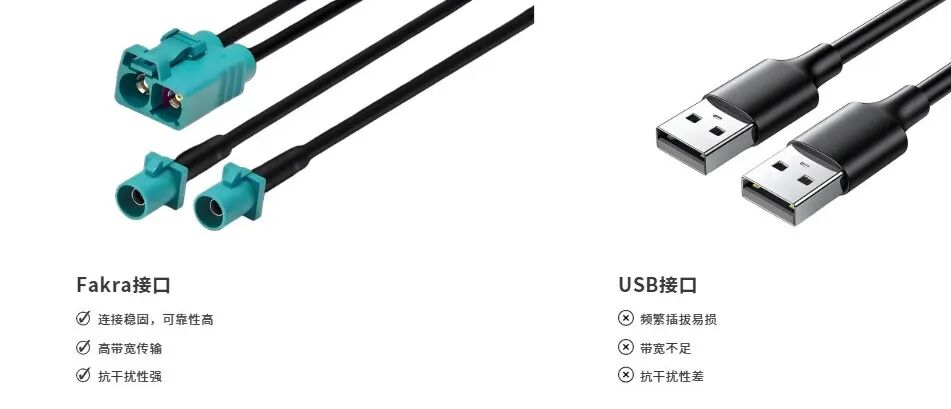
GMSL cameras utilize more robust Fakra connectors, which are high-performance RF coaxial connectors characterized by their compact size, high reliability, and strong anti-interference capabilities. Their unique spiral locking mechanism allows for quick and secure plugging and unplugging. Compared to traditional interfaces, this connection effectively prevents loosening or detachment caused by vibration or external pulling during connection, thereby avoiding issues like blurred images or data transmission interruptions, and maintaining the stability of image acquisition and transmission.
Comparison Metric
USB Camera
GMSL Camera
Transmission Distance
Shorter, generally not exceeding 5 meters; active extension cables rarely exceed 10 meters.
Long-distance transmission, standard GMSL typically around 15 meters.
Transmission Bandwidth
USB 3.0 actual maximum bandwidth 3.2Gbps, cannot transmit 4K/30fps raw images.
GMSL 2 maximum bandwidth up to 6Gbps, can transmit 4K/30fps resolution lossless raw images.
Data Latency
Unstable transmission latency, typically more than 1 frame (30-100 milliseconds).
Transmission latency within 1 frame, meeting real-time control requirements.
Synchronization
Poor synchronization among multiple cameras, low precision.
Supports hardware synchronization signals, multi-camera and sensor synchronization precision up to microsecond level.
Connection Stability
Fragile connection method, easily loosened by external forces.
Robust connection, vibration-resistant, stable connection in harsh environments.
Anti-interference Capability
Non-differential signal, weak anti-interference capability, images easily disturbed.
Differential signal, strong anti-interference capability, stable operation in complex electromagnetic environments.
Performance Comparison Table: USB Cameras vs. GMSL Cameras
In summary, GMSL cameras are becoming the mainstream choice for mobile robots due to their advantages in long-distance transmission, high bandwidth, high reliability, low latency, synchronization, and anti-interference capabilities.