Grating Sensor, FPGA, and ARM-Based Measurement and Control Solution
A measurement and control solution combining grating sensors with FPGA and ARM achieves high precision, real-time performance, and multi-scenario adaptability through hardware collaborative division of labor: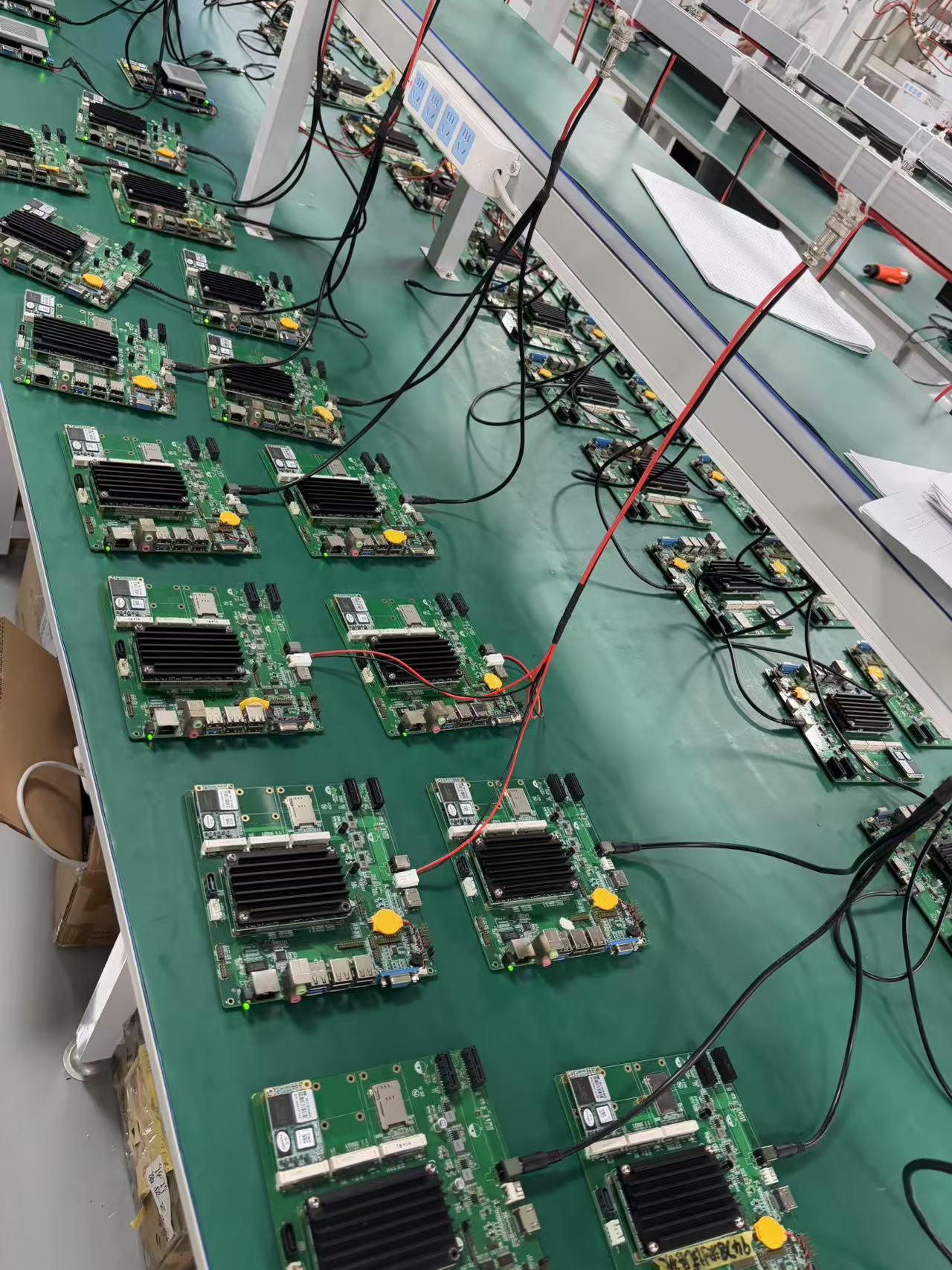
⚙️ I. System Architecture and Division of Labor
- **Sensing Layer (Grating Sensor)**
- Utilizes grating scales to output quadrature pulse signals, achieving a resolution of 0.5μm and an accuracy of ±1μm. It supports non-contact measurement, offers strong electromagnetic interference resistance, and is suitable for high-speed motion scenarios17.
- Supports multi-channel synchronous acquisition (e.g., X/Y dual-axis or circular arrangement), realizing displacement-to-electrical signal conversion based on the Moiré fringe principle28.
- **Signal Processing Layer (FPGA)**
- Real-time Decoding: Performs quadrature frequency multiplication subdivision, direction determination, and high-speed counting on grating signals, with processing delays controlled at the microsecond level14.
- Acceleration Calculation: Built-in hardware timers record pulse intervals, calculating instantaneous acceleration in real-time by combining with the rate of displacement change, achieving nanosecond-level timestamp accuracy14.
- Multi-channel Parallel Processing: Independently processes multiple grating signals (e.g., 60 channels in a circular arrangement), avoiding inter-channel interference217.
- Anti-vibration Design: Integrates an adaptive notch filter to suppress mechanical resonance interference, with synchronization error ≤ ±0.005mm16.
- **Control and Computation Layer (ARM)**
- Runs complex algorithms (e.g., Kalman filtering, differential methods) to output three parameters: displacement, velocity, and acceleration14.
- Manages peripheral modules: including LCD display, data storage (DDR3), Ethernet communication (EtherCAT/10 Gigabit Ethernet), and user interaction14.
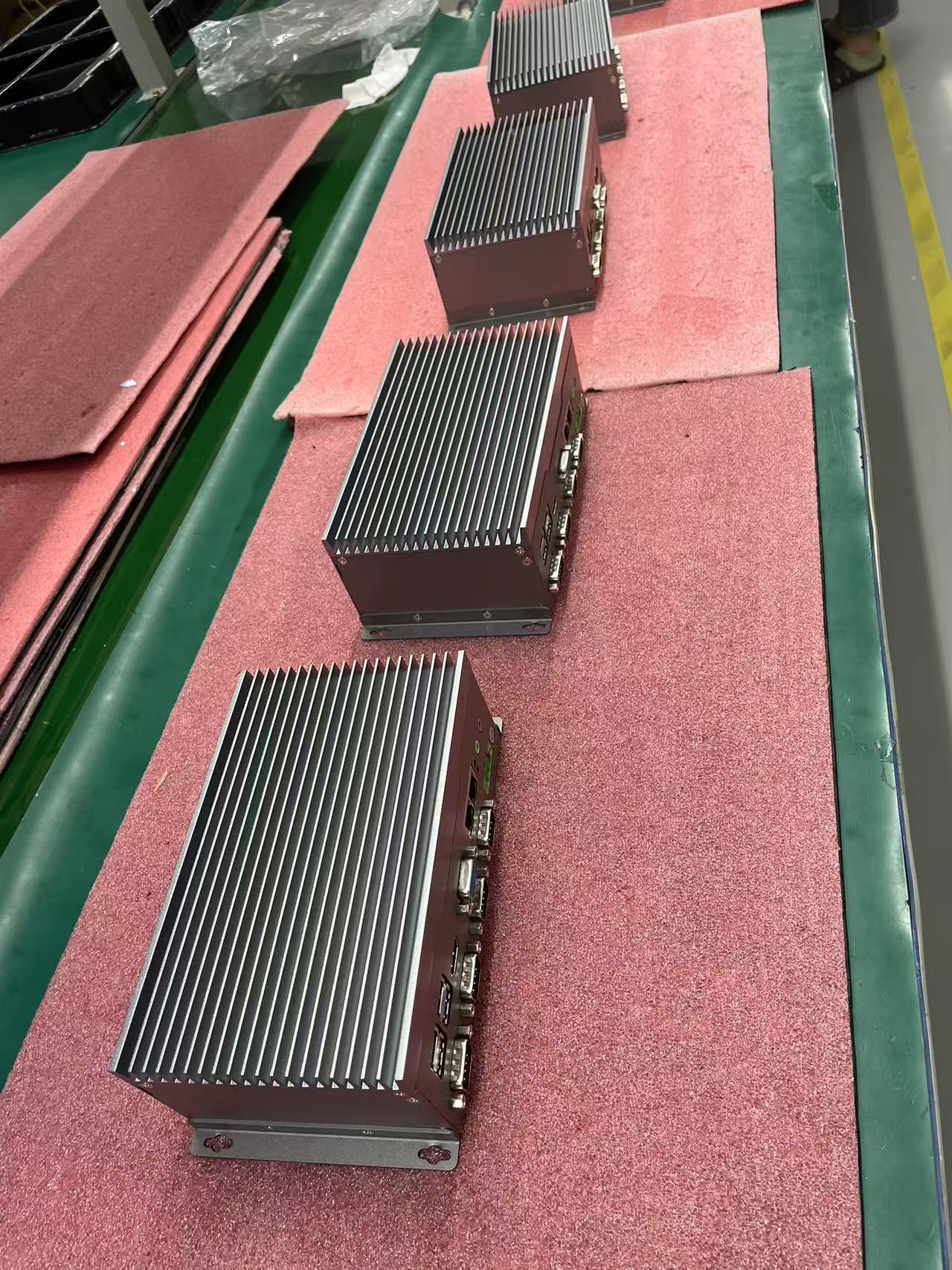
⚡️ II. Key Technology Implementations
- High-Precision Displacement Measurement
- Dual Grating Scale Solution: Enhances measurement accuracy during high-speed motion through signal switching and synthesis technology, overcoming the speed limitations of single grating scales16.
- Dynamic Tracking Subdivision Method: FPGA enables micro-displacement measurement with a resolution of up to 5nm, suitable for semiconductor inspection scenarios110.
- High-Speed Data Transmission
- ARM and FPGA interact via FSMC/high-speed parallel bus, achieving a bandwidth of up to 1GB/s114.
- Supports PCIe 2.0×8 or 10 Gigabit Ethernet (SFP+), enabling 32Gbps data upload116.
- Scalability and Synchronous Control
- Supports multi-card parallel operation via EtherCAT bus, expanding to 16-axis synchronous monitoring16.
- FPGA enables synchronous parsing of multiple encoder signals (e.g., EnDat2.2 protocol), ensuring phase consistency for multi-axis coordination617.
III. Typical Application Scenarios
Field
Application Case
Technical Advantages
CNC Machine Tools
Full-closed loop control of tool movement, real-time compensation for trajectory errors
Multi-axis synchronous accuracy ±1μm, anti-vibration interference16
Semiconductor Inspection
Monitors micro-vibrations of precision motion stages, combined with dynamic surface reconstruction algorithms
Nanometer-level resolution, adaptability to vacuum environments110
Power System Monitoring
Monitoring wire load/transformer temperature, fiber optic grating resistance to electromagnetic interference
Long-distance transmission, stability in harsh environments12
Multi-device Collaboration
Industrial IoT gateway integration, supporting custom protocols (e.g., aerospace bus)
ARM+FPGA heterogeneous architecture, flexible expansion through hardware-software co-design517
📊 IV. Performance Optimization Design
- Anti-interference Design: Differential signal transmission, electromagnetic shielding layers, and common-mode noise suppression circuits, with linearity ≤ 0.002%118.
- Real-time Assurance: FPGA hardware-accelerated current loop control (response delay < 5μs), meeting the microsecond-level closed-loop requirements of servo systems6.
- Low-Power Architecture: Industrial-grade wide temperature design (-40℃~+85℃), supporting battery power and IP65 protection18.
This solution deeply integrates grating sensing, FPGA real-time processing, and ARM intelligent control, providing a reliable measurement and control foundation for precision manufacturing and industrial automation14.