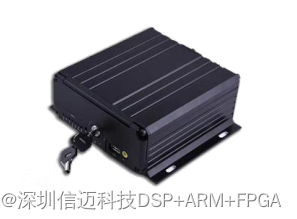
【Vehicle PC】4/8-Channel AHD 1.3 Megapixel Mobile Digital Video Recorder
Fleet managers and system integrators evaluating in-vehicle recording solutions frequently face the same trade-off: consumer dashcams are cheap but lack the channel count, storage depth, and remote-management capabilities that commercial vehicle fleets require. The 4/8-channel AHD 1.3-megapixel Mobile DVR described here is purpose-built for that gap — offering multi-camera HD recording, cellular connectivity, GPS tracking, and rugged hard-drive storage in a single vehicle-mounted unit.
AHD Video: Why It Matters for Fleet Cameras
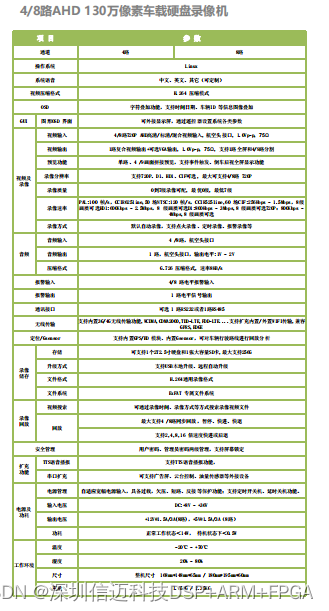
Analog High Definition (AHD) is a coax-based video standard that carries HD signals over the same RG59 cable used for legacy analog CCTV. In a vehicle environment this matters enormously: coax is mechanically robust, immune to the noise and impedance issues that plague long USB or IP cable runs, and does not require per-camera encoding hardware. The DVR receives raw AHD signals from up to 4 or 8 cameras simultaneously and handles all encoding internally, simplifying wiring and reducing the number of failure points in a moving vehicle.
At 720P (1280×720) with 1.3-megapixel sensors, each camera channel delivers enough resolution to capture license plates, cargo loads, and cabin activity at frame rates suitable for evidence-grade footage — a meaningful step above the 480-line analog cameras common in earlier fleet DVR generations.
Storage Architecture
The unit records directly to an internal hard disk drive, supporting capacities up to 2 TB. For context, continuous 4-channel 720P H.264 recording typically consumes roughly 40–80 GB per day depending on bitrate settings, meaning a 2 TB drive provides approximately 25–50 days of rolling footage before the oldest footage is overwritten. Eight-channel deployments halve that window.
Hard-disk-based recording in a vehicle requires careful mechanical consideration — drives must be mounted with vibration damping to survive road shock and temperature swings. Purpose-built mobile DVRs like this one generally incorporate shock-mounted drive bays and firmware that gracefully handles sudden power loss (a common cause of file-system corruption in vehicles).
Optional Connectivity Modules
GPS Positioning
The optional GPS module correlates a continuous position, speed, and heading log with the video timeline. This geo-stamped data is essential for accident reconstruction, route compliance auditing, and driver-behaviour reporting. The GPS track is typically embedded in the recording metadata or written to a sidecar file, allowing fleet-management software to overlay the vehicle's path on a map alongside the camera footage from the same moment.
Wi-Fi Auto-Download
The optional Wi-Fi module enables automatic, high-speed offload of recorded footage when a vehicle returns to a depot or enters a geofenced area covered by a known access point. Rather than requiring a technician to pull the drive or manually connect a laptop, the DVR negotiates with a local Wi-Fi network and pushes new recordings to a central server in the background. This keeps footage retention current without adding per-vehicle labour cost.
3G/4G Cellular for Real-Time Preview and Remote Management
The built-in optional 3G/4G module extends connectivity beyond the depot. Dispatchers can open a live view from any camera channel over the cellular link, check recording status, configure parameters, or retrieve a specific video clip without waiting for the vehicle to return. In regulated industries — school buses, public transit, hazmat transport — this real-time visibility capability is often a compliance requirement rather than a convenience.
Additional Hardware Features
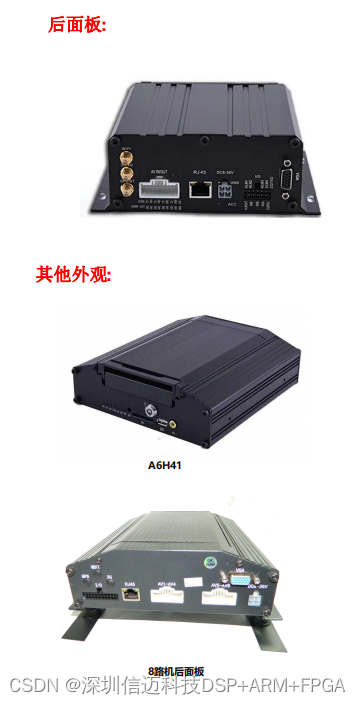
Standard VGA output allows the DVR to drive an in-cab monitor directly, giving drivers or supervisors a live multi-view of all camera channels without any additional hardware. VGA is a mature, universally supported interface that adds no latency and requires no driver configuration.
Built-in acceleration sensor (accelerometer) enables event-triggered recording: a hard brake, sharp turn, or collision threshold automatically tags the surrounding footage as a critical event and may lock it from being overwritten during the normal rolling-buffer cycle. This is the primary mechanism by which fleet managers retrieve evidence from incidents without having to comb through hours of continuous footage.
Deployment Considerations
A 4-channel configuration is typical for smaller vehicles — front, rear, and two side mirrors — while the 8-channel variant suits larger vehicles such as buses, coaches, or articulated lorries that require additional interior cabin coverage or dedicated cargo-bay cameras.
Because AHD runs over coax, camera placement flexibility is high: runs of 50–100 metres are achievable without signal amplifiers, which matters when routing cable the length of a long-haul trailer. The DVR's role as the single recording and connectivity hub means that adding or repositioning cameras requires only cable work at the camera end, not changes to the recording head.
For installations requiring remote management from day one, specifying both the 3G/4G module and GPS at order time avoids the cost of retrofitting later, since both modules typically integrate into reserved slots on the main board rather than being field-upgradeable via external dongles.